Cricket News: Latest Cricket News, Live Scores, Results, Upcoming match Schedules | Times of India

Sportstar - IPL

Showing posts with label राजकीय/राज्य पक्षी. Show all posts

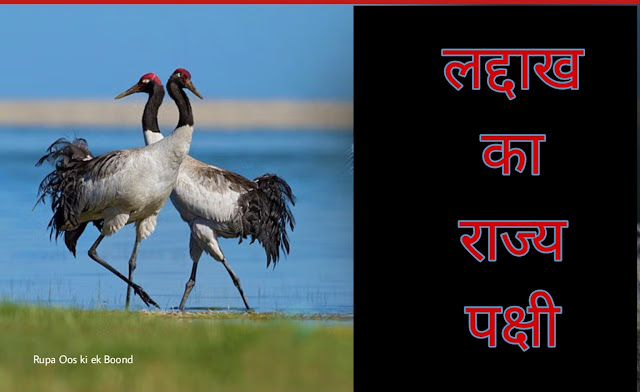
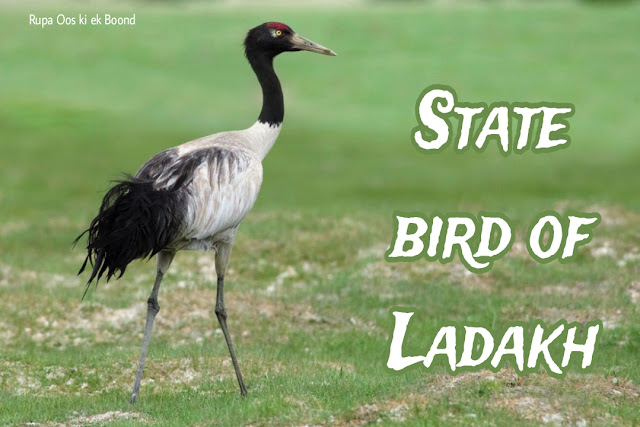
लद्दाख का राज्य पक्षी (State Bird of Ladakh) || काली गर्दनवाला सारस (Grus nigricollis) || Black-necked stork ||

लद्दाख का राज्य पक्षी

राज्य के राजकीय पक्षियों की सूची में आज चर्चा करते हैं, केंद्रशासित प्रदेश लद्दाख के राजकीय पक्षी की। इस ब्लॉग के माध्यम से अभी तक सभी राज्यों और केंद्र शासित प्रदेशों के राजकीय पक्षियों की चर्चा हो चुकी है। इसके बाद इस अंक को आगे बढ़ाते हुए प्रत्येक राज्य के राजकीय पशुओं के बारे में चर्चा करेंगे।
लद्दाख का राज्य पक्षी (State Bird of Ladakh) || काली गर्दनवाला सारस (Grus nigricollis) || Black-necked stork ||

केंद्र शासित प्रदेश लद्दाख का राजकीय पक्षी काली गर्दन वाला सारस (Black-necked stork)(Grus nigricollis) है, जो केवल लद्दाख क्षेत्र में पाया जाता है।

अगस्त 2019 में, राष्ट्रपति राम नाथ कोविंद ने जम्मू और कश्मीर राज्य को दो केंद्र शासित प्रदेशों (यूटी) - जम्मू और कश्मीर और लद्दाख में विभाजित करने के लिए एक कानून को मंजूरी दी थी। केंद्र शासित प्रदेश 31 अक्टूबर, 2019 को अस्तित्व में आए। जम्मू-कश्मीर राज्य के पुनर्गठन के लगभग दो साल बाद Sep 2021 में लद्दाख प्रशासन ने काली गर्दन वाली सारस (ब्लैक नेक क्रेन ) को राज्य पक्षी और हिम तेंदुए (स्नो लेपर्ड) को राज्य पशु घोषित किया गया। काली गर्दन वाला सारस 5 अगस्त, 2019 ( केंद्र शासित प्रदेश लद्दाख का स्थापना दिवस) से पूर्व जम्मू-कश्मीर का राज्य पक्षी था। 
लद्दाख का राज्य पक्षी (State Bird of Ladakh) || काली गर्दनवाला सारस (Grus nigricollis) || Black-necked stork ||

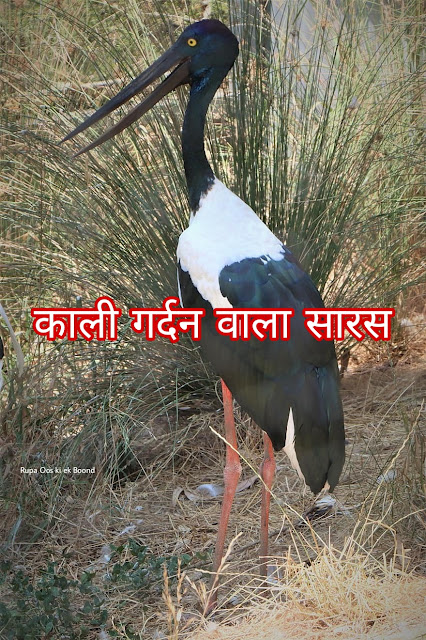
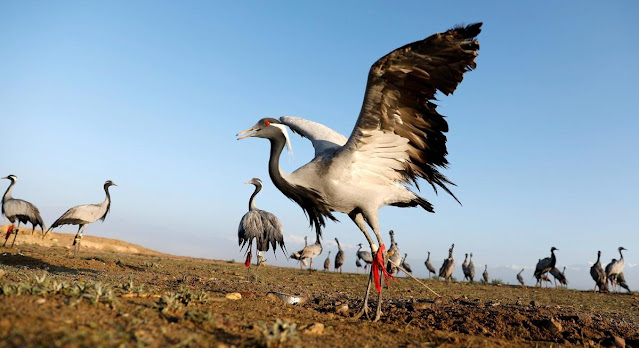
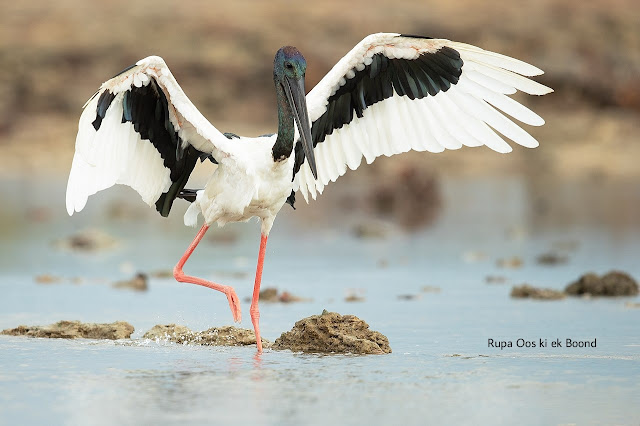
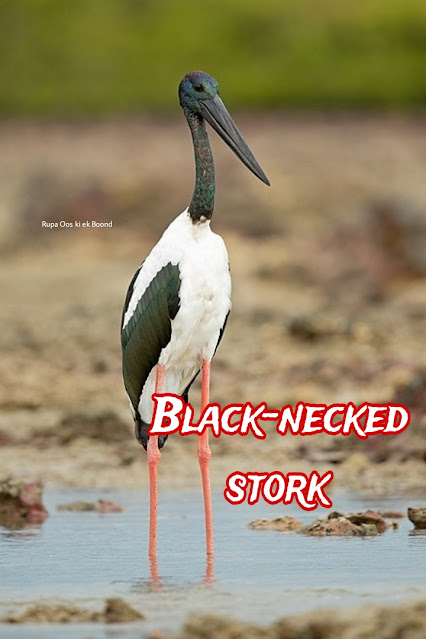
काली गर्दन वाला सारस ( एफिपिओरिन्चस एशियाटिकस ) सारस परिवार का एक लंबा, लंबी गर्दन वाला पक्षी है। सारस की इस प्रजाति की सबसे बड़ी आबादी ऑस्ट्रेलिया में पाई जाती है। भारत में, यह प्रजाति पश्चिम, मध्य उच्चभूमि और उत्तरी गंगा के मैदानी इलाकों में पूर्व में असम घाटी तक फैली हुई है, लेकिन प्रायद्वीपीय भारत और श्रीलंका में दुर्लभ है। इसका वजन लगभग 5 किलो होता है एवं यह लगभग 115 सेमी लंबा होता है। ऊपरी लंबी गर्दन, सिर, प्राथमिक एवं द्वितीयक उड़ान पंख एवं पूंछ पूर्ण रूप से काले होते हैं तथा एक विशिष्ट लाल कलगी (किरीट) सिर को सुशोभित करता है। काली गर्दन वाले सारस के दोनों लिंग (नर एवं मादा) लगभग एक ही आकार के होते हैं, किंतु नर मादा से आकार में थोड़ा बड़ा होता है।
लद्दाख का राज्य पक्षी (State Bird of Ladakh) || काली गर्दनवाला सारस (Grus nigricollis) || Black-necked stork ||

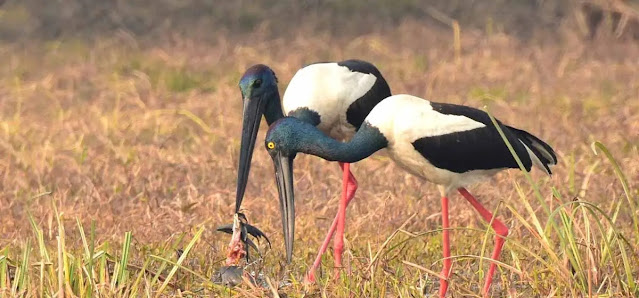
किशोरावस्था के सारस का सिर तथा गर्दन भूरे रंग का होता है एवं पंख वयस्क की तुलना में थोड़ा हल्का होता है।यह आर्द्रभूमि आवासों और चावल और गेहूं जैसी कुछ फसलों के खेतों के पास रहता है, जहां यह विभिन्न प्रकार के जानवरों के शिकार की तलाश करता है। दोनों लिंगों के वयस्क पक्षियों की चोंच भारी होती है और उनका पैटर्न सफेद और इंद्रधनुषी काले रंग का होता है, लेकिन लिंगों की परितारिका के रंग में अंतर होता है , मादाओं की परितारिका पीले रंग की होती है और नर की परितारिका गहरे रंग की होती है। ऑस्ट्रेलिया में, इसे कभी-कभी जबीरू भी कहा जाता है, हालांकि यह नाम अमेरिका में पाई जाने वाली सारस प्रजाति को संदर्भित करता है। यह उन कुछ सारस में से एक है, जो भोजन और प्रजनन के समय दृढ़ता से क्षेत्रीय होते हैं।
लद्दाख का राज्य पक्षी (State Bird of Ladakh) || काली गर्दनवाला सारस (Grus nigricollis) || Black-necked stork ||

काली गर्दन वाली क्रेन केवल पूर्वी लद्दाख के उच्च-ऊंचाई वाले आर्द्रभूमि और दलदल में पाई जाती है और इसे IUCN लाल सूची में निकट संकटग्रस्त के रूप में सूचीबद्ध किया गया है।

English Translate

State bird of Ladakh


Today in the list of state birds of the state, let us discuss the state bird of the Union Territory of Ladakh. Till now, the state birds of all the states and union territories have been discussed through this blog. After this, taking this issue forward, we will discuss about the state animals of each state.
लद्दाख का राज्य पक्षी (State Bird of Ladakh) || काली गर्दनवाला सारस (Grus nigricollis) || Black-necked stork ||

The state bird of the Union Territory of Ladakh is the black-necked stork (Grus nigricollis), which is found only in the Ladakh region.

In August 2019, President Ram Nath Kovind had approved a law to bifurcate the state of Jammu and Kashmir into two union territories (UTs) – Jammu and Kashmir and Ladakh. The union territories came into existence on October 31, 2019. In Sep 2021, almost two years after the reorganization of the state of Jammu and Kashmir, the Ladakh administration declared the black neck crane as the state bird and the snow leopard as the state animal. The black-necked stork was the state bird of Jammu and Kashmir before August 5, 2019 (the Foundation Day of the Union Territory of Ladakh).
लद्दाख का राज्य पक्षी (State Bird of Ladakh) || काली गर्दनवाला सारस (Grus nigricollis) || Black-necked stork ||

The black-necked stork (Ephipiorhynchus asiaticus) is a large, long-necked bird of the stork family. The largest population of this species of stork is found in Australia. In India, this species is widespread in the west, central highlands and northern Gangetic plains to the Assam valley in the east, but is rare in peninsular India and Sri Lanka. Its weight is about 5 kg and it is about 115 cm long. The long upper neck, head, primary and secondary flight feathers and tail are completely black and a distinctive red crest adorns the head. Both sexes (male and female) of the black-necked stork are of almost the same size, but the male is slightly larger in size than the female.
लद्दाख का राज्य पक्षी (State Bird of Ladakh) || काली गर्दनवाला सारस (Grus nigricollis) || Black-necked stork ||

The juvenile stork has a brown head and neck and slightly lighter plumage than the adult. It lives in wetland habitats and near fields of some crops such as rice and wheat, where it searches for prey for a variety of animals. Does. Adult birds of both sexes have heavy bills and a pattern of white and iridescent black, but the sexes differ in iris colour, with females having a yellow iris and males having a darker iris. . In Australia, it is sometimes called a jabiru, although this name refers to a stork species found in the Americas. It is one of the few storks that are strongly territorial when it comes to feeding and breeding.

The black-necked crane is found only in the high-altitude wetlands and swamps of eastern Ladakh and is listed as Near Threatened on the IUCN Red List.

भारत के सभी राज्यों के राजकीय पक्षियों की सूची |(List of State Birds of India)

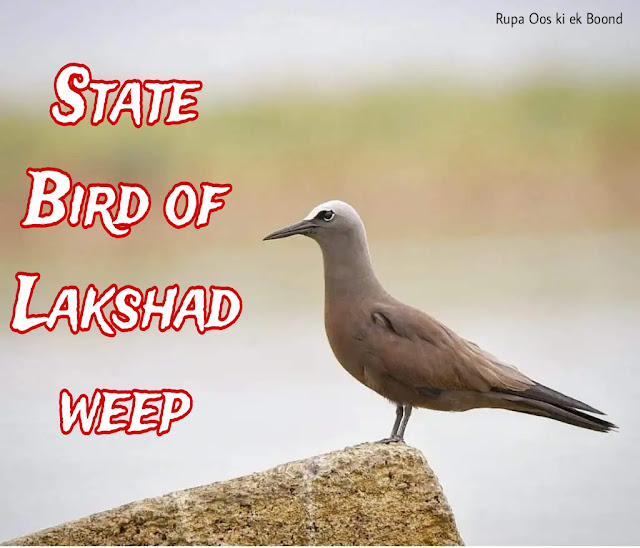
लक्षद्वीप का राज्य पक्षी (State Bird of Lakshadweep || ब्राउन नोडी (एनस स्टोलिडस) || Brown Noddy ||

लक्षद्वीप का राज्य पक्षी

आज चर्चा करते हैं, लक्षद्वीप के राजकीय पक्षी के बारे में, जिसका नाम है- ब्राउन नोडी (Brown Noddy)।समुद्री पक्षियों के परिवार लारिडे में भूरे रंग का नोडी होता है, जिसे कभी-कभी सामान्य नोडी (एनस स्टोलिडस) के रूप में जाना जाता है। इसके बड़े आकार और काले पंखों के बजाय गहरे भूरे रंग के कारण, जो इसे निकटतम संबंधित काले नोडी से अलग करता है, सबसे बड़े नोडीज़ की पहचान की जा सकती है।

लक्षद्वीप का राज्य पक्षी (State Bird of Lakshadweep || ब्राउन नोडी (एनस स्टोलिडस) || Brown Noddy ||

भूरे रंग के नोडी के पंखों का फैलाव 75-86 सेमी और लंबाई 38-45 सेमी होती है। गहरे चॉकलेट-भूरे रंग का, सिर पर मुकुट और माथा हल्के भूरे या सफेद रंग का होता है। इसकी सफ़ेद आँख की रिंग पतली और अधूरी होती है।गहरे रंग के पैर और टांगें एक लंबी, पच्चर के आकार की पूंछ के साथ जुड़ी हुई होती हैं। कुररी के पैर छोटे और जालपाद युक्त होते हैं, चोंच बड़ी और तीक्ष्ण तथा डैने नुकीले होते हैं। इन पक्षियों का माथा और सिर गर्मियों में काले रंग के हो जाते हैं, मानो इन्होंने काले मखमल की टोपी पहन रखी हो।

इस पक्षी का मुख्य भोजन मछली है, जिसकी तलाश में यह पानी की सतह से चोंच मिलाकर उड़ती रहती है। सैकड़ों ब्राउन नोडी (कुररियाँ) एक साथ रेत में अंडे देती हैं। यदि कोई इनके निकट चला जाए तो ये बहुत जोर-जोर से शोर मचाती हैं।

लक्षद्वीप का राज्य पक्षी (State Bird of Lakshadweep || ब्राउन नोडी (एनस स्टोलिडस) || Brown Noddy ||

ब्राउन नोडी का दुनिया भर में वितरण है, जिसमें हवाई, तुआमोटू द्वीपसमूह, कैरेबियन, सेशेल्स, ऑस्ट्रेलिया और ट्रिस्टन दा कुन्हा शामिल हैं। भारत में यह पक्षी लक्षद्वीप के पीएम सईद समुद्री पक्षी संरक्षण रिजर्व में संरक्षित है। ब्राउन नोडी एक औपनिवेशिक पक्षी है जो ऊंची चट्टानों या छोटे पेड़ों या झाड़ियों पर घोंसला बनाता है।

संरक्षण स्थिति: पक्षी को IUCN की संकटग्रस्त प्रजातियों की लाल सूची में "कम से कम चिंताजनक" के रूप में सूचीबद्ध किया गया है ।

English Translate

State Bird of Lakshadweep

Today let's discuss about the state bird of Lakshadweep, whose name is Brown Noddy. The brown noddy is in the family of sea birds, Laridae, which is sometimes known as the common noddy (Annus stolidus). Is known. The largest nodii can be identified by its larger size and dark brown rather than black wings, which distinguish it from the closely related black nodii.

लक्षद्वीप का राज्य पक्षी (State Bird of Lakshadweep || ब्राउन नोडी (एनस स्टोलिडस) || Brown Noddy ||

The brown noddy has a wingspan of 75–86 cm and a length of 38–45 cm. Dark chocolate-brown in colour, the crown and forehead being light brown or white. Its white eye-ring is thin and incomplete. The dark legs and feet are joined by a long, wedge-shaped tail. The legs of Kurri are short and webbed, the beak is large and sharp and the wings are pointed. The forehead and head of these birds become black in summer, as if they are wearing a black velvet cap.

The main food of this bird is fish, in search of which it keeps flying with its beak on the surface of the water. Hundreds of brown noddies lay eggs in the sand simultaneously. If someone goes near them, they make a very loud noise.

The brown noddy has a worldwide distribution, including Hawaii, the Tuamotu Archipelago, the Caribbean, Seychelles, Australia and Tristan da Cunha. In India, this bird is protected in the PM Sayeed Sea Bird Conservation Reserve in Lakshadweep. The brown noddy is a colonial bird that nests on high rocks or in small trees or bushes.

Conservation status: The bird is listed as "Least Concern" on the IUCN Red List of Threatened Species.

भारत के सभी राज्यों के राजकीय पक्षियों की सूची |(List of State Birds of India)

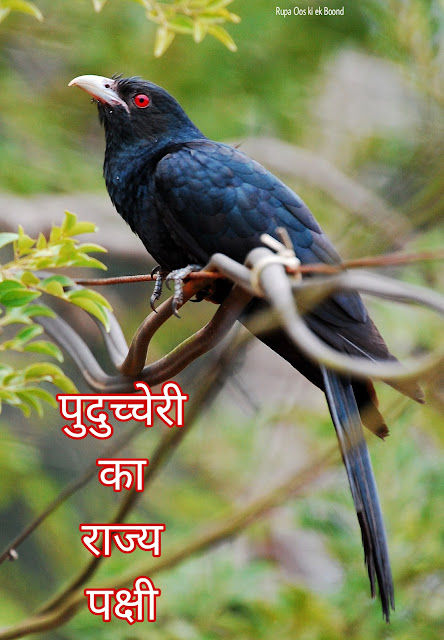
पुदुच्चेरी का राज्य पक्षी (State Bird of Puducherry) || एशियाई कोयल (Eudynamys scolopaceus)/ Asian Koel

पुदुच्चेरी का राज्य पक्षी

शायद ही कोई ऐसा भी व्यक्ति होगा जिसे कोयल की आवाज लुभाती नहीं होगी। बच्चे तो कोयल की आवाज के पीछे कू कू की आवाज भी निकालते हैं। कोयल के बारे में इस ब्लॉग में पहले भी पोस्ट डाला जा चुका है। आज इस पक्षी को पुडुचेरी के राष्ट्रीय पक्षी के रूप में जानेंगे। तो चलिए आज चर्चा करते हैं, पुदुच्चेरी के राजकीय पक्षी के बारे में, जिसका नाम है- "एशियाई कोयल (Asian Koel)"

पुदुच्चेरी का राज्य पक्षी (State Bird of Puducherry) || एशियाई कोयल (Eudynamys scolopaceus)/ Asian Koel

कोयल (Cuckoo) का वैज्ञानिक नाम "यूडाइनेमिस स्कोलोपेकस (eudainemis scolopecus)" है। यह सर्वाहारी जीवों की श्रेणी वाला पक्षी है। बसंत ऋतू के समय कोयल कूकती है। इस कोयल की एक बहुत ही विचित्र विशेषता है कि यह अपना अंडा कौए के घोसले में देती है, और खुद का घोसला कभी नहीं बनाती।

  "कूक कूक कर बोले कोयल
                         मीठी मीठी इसकी तान,
  सबसे मीठा मीठा बोलो,
                 सदा मिलेगा यश, सम्मान "

कोयल इस बात का उदाहरण है कि कोई रूप से कैसा भी हो वाणी का मधुर है, तो किसी को भी आकर्षित कर सकता है। अपनी मधुर वाणी से किसी का भी मन मोह लेता है।

कोयल प्रकृति की बेटियां हैं। हर साल वसंत ऋतु में पूरी तन्मयता, ईमानदारी और समयबद्धता के साथ अपनी मीठी तान छेड़कर सम्पूर्ण वातावरण को और भी अधिक मोहक और हसीन बनाती हैं। हालांकि प्रकृति ने कोयल को सुरीली आवाज से नवाजा है, लेकिन इसके बावजूद यह पक्षी स्वभाव से बेहद चालाक पक्षी की श्रेणी में आने वाला जीव है। 

पुदुच्चेरी का राज्य पक्षी (State Bird of Puducherry) || एशियाई कोयल (Eudynamys scolopaceus)/ Asian Koel

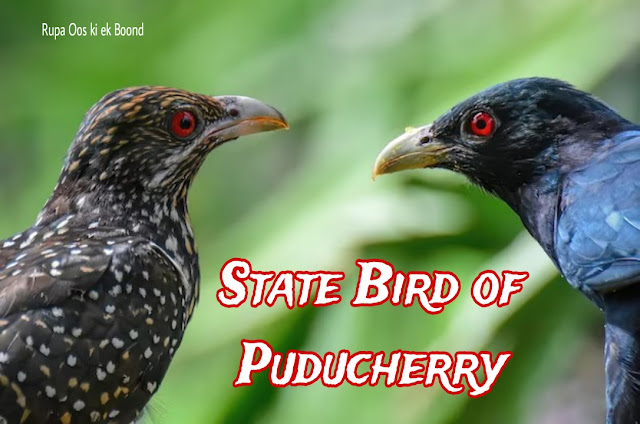
कोयल की मधुर आवाज़ के कारण कोएल पक्षी को भारत में नाइटिंगेल भी कहा जाता है। एशियाई कोयल एक बड़ी-लंबी पूंछ वाली कोयल है, जिसकी लंबाई पैंतालीस सेंटीमीटर है। नर एक हरे हरे बिल, अमीर लाल आँखें और भूरे रंग के पैर और पैरों के साथ काले रंग का नीला है। 

मादा के शरीर का ऊपरी हिस्सा भूरे रंग का होता है और निचले हिस्से सफेद रंग के होते हैं। मादाओं में एक जैतून या हरी चोंच और लाल आँखें होती हैं। यह एक ब्रूड परजीवी है, जो विभिन्न प्रकार के पक्षियों के घोंसले में अपना एकल अंडा देता है।

एशियाई कोयल सर्वाहारी है, जो विभिन्न प्रकार के कीड़े, कैटरपिलर, अंडे और छोटे कशेरुक का सेवन करता है। वयस्क कोयल बड़े पैमाने पर फलों का सेवन करता है। यह कभी-कभी छोटे पक्षियों के अंडे का सेवन भी करता है।

English Translate

State Bird of Puducherry

There would hardly be any person who would not be attracted by the sound of the cuckoo. Children even make coo-coo sounds after the sound of the cuckoo. A post about Cuckoo has already been posted in this blog. Today this bird will be known as the national bird of Puducherry. So let us discuss today about the state bird of Puducherry, whose name is- "Asian Koel".

पुदुच्चेरी का राज्य पक्षी (State Bird of Puducherry) || एशियाई कोयल (Eudynamys scolopaceus)/ Asian Koel

The scientific name of Cuckoo is "Eudainemis scolopecus". This is a bird belonging to the category of omnivores. The cuckoo croaks during the spring season. A very strange feature of this cuckoo is that it lays its egg in the crow's nest, and never makes its own nest.

  The cuckoo is an example of the fact that no matter what one's appearance is, if one's speech is sweet, one can attract anyone. He captivates anyone's heart with his sweet voice.

Cuckoos are daughters of nature. Every year in the spring season, she makes the entire atmosphere even more attractive and beautiful by playing her sweet tune with full devotion, honesty and punctuality. Although nature has blessed the cuckoo with a melodious voice, yet this bird is a very clever bird by nature.

पुदुच्चेरी का राज्य पक्षी (State Bird of Puducherry) || एशियाई कोयल (Eudynamys scolopaceus)/ Asian Koel

Due to the melodious voice of the cuckoo, the Koel bird is also called Nightingale in India. The Asian cuckoo is a large long-tailed cuckoo, reaching forty-five centimeters in length. The male is blackish blue with a pale green bill, rich red eyes and brown legs and feet.

The upper part of the female's body is brown and the lower parts are white. Females have an olive or green bill and red eyes. It is a brood parasite, laying its single egg in the nest of a variety of birds.

The Asian cuckoo is omnivorous, consuming a variety of insects, caterpillars, eggs, and small vertebrates. The adult cuckoo consumes fruits extensively. It also occasionally consumes eggs of small birds.

भारत के सभी राज्यों के राजकीय पक्षियों की सूची |(List of State Birds of India)

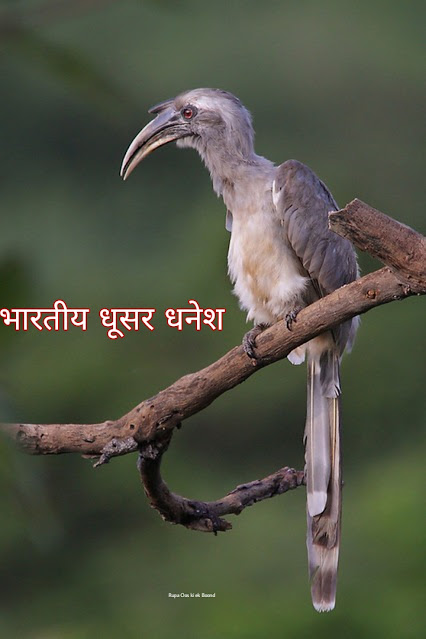
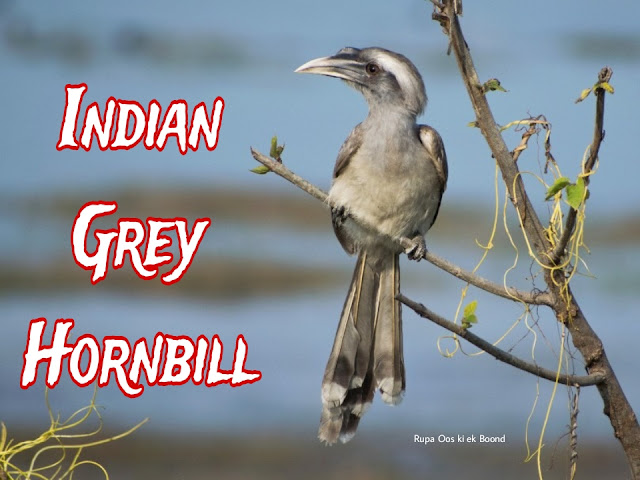
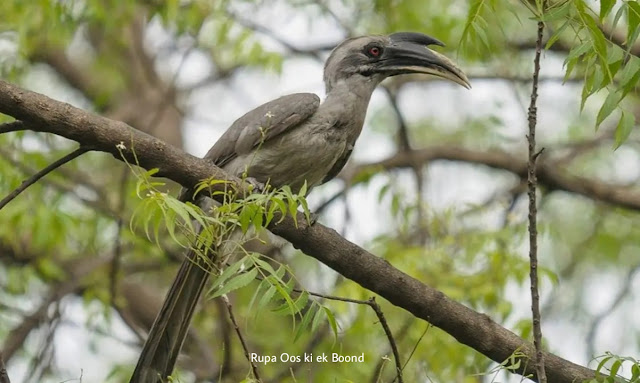
चंडीगढ़ का राज्य पक्षी (State Bird of Chandigarh) || "भारतीय धूसर धनेश (Indian Grey Hornbill)"

चंडीगढ़ का राज्य पक्षी (State Bird of Chandigarh)

जब भी पक्षियों के बारे में लिखती हूं, तो सोचती हूं काश मेरे पास भी पंख होते और मैं भी इन पक्षियों की तरह स्वच्छंद आसमान में उड़ान भरती। खैर यह कल्पना की उड़ान है कहीं तक भी जाती है। आज चर्चा करते हैं, चंडीगढ़ के राजकीय पक्षी के बारे में, जिसका नाम है "भारतीय धूसर धनेश (Indian Grey Hornbill)"। 

https://rupaaooskiekboond.blogspot.com/2023/09/state-bird-of-chandigarh-indian-grey.html

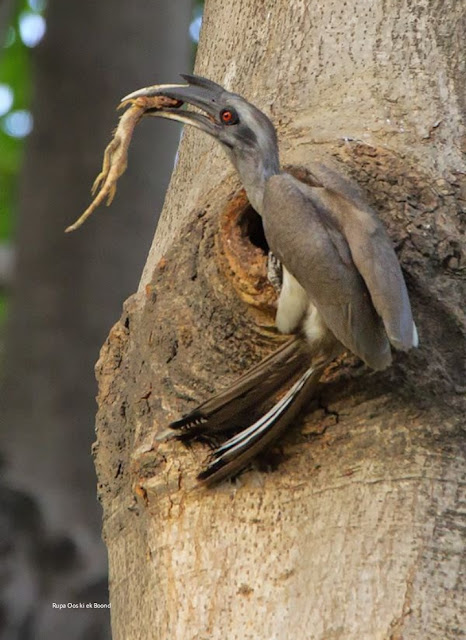
इसका वैज्ञानिक नाम Ocyceros birostris (ऑकीसेरॉस बिरोस्ट्रिस) है। यह सर्वाधिक वानस्पतिक पक्षी है और आमतौर पर जोड़े में दिखायी पड़ती है। इनमे पूरे शरीर पर ग्रे रंग के रोयें होते हैं और इनके पेट का हिस्से हल्का ग्रे या फीके सफ़ेद रंग का होता है। इनके सिर का उभार काले या गहरे ग्रे रंग का होता है। यह लगभग 24 इंच लम्बी होती है। इनके शरीर का ऊपरी हिस्सा मिश्रित ग्रे और भूरे रंग का होता है और फीके पीले रंग की आंख की भौहों के भी कुछ हल्के निशान देखे जा सकते हैं। कान का आवृत भाग गहरे रंग का होता है। पंख के उड़ान भरने वाले पर गहरे भूरे रंग के होते हैं और इनका सिरा सफ़ेद रंग का होता है। इनकी पूंछ का अग्रसिरा सफ़ेद होता है और गहरे रंग की उपांत धारी होती है। इनकी आंख की पुतली लाल रंग की होती है और पलक पर बाल होते हैं। 

https://rupaaooskiekboond.blogspot.com/2023/09/state-bird-of-chandigarh-indian-grey.html

इस पक्षी की नर और मादा प्रजातियों के बीच कुछ बुनियादी अंतर पाए जाते हैं:-
नर के पास एक गहरे रंग की चोंच पर एक बड़ा आवरण होता है और एक पीले रंग का कलमेन होता है और निचला जबड़ा कम होता है। वयस्क नर में आंखों के आसपास की नग्न त्वचा गहरे रंग की होती है, जबकिमादाओं में यह हल्के लाल रंग की होती है। मादा की खेप पीले रंग की होती है, जिसका निचला भाग काला होता है।       

https://rupaaooskiekboond.blogspot.com/2023/09/state-bird-of-chandigarh-indian-grey.html 

इनकी आवाज़ कूकने जैसी जो कुछ-कुछ काली चील के समान होती है। इनकी उड़ान थोड़ी मुश्किल होती है और ये हवा में तैरने के साथ अपने फैले हुए पंखों को फड़फड़ाते हैं। ये छोटे समूहों या जोड़ों के रूप में पाए जाते हैं। इनका प्रजनन काल अप्रैल से जून तक होता है और ये एक बार ऐ से पांच तक बिलकुल एक ही आकार एवम रूप के अंडे देती हैं। 

भारतीय ग्रे हॉर्नबिल आमतौर पर लम्बे पेड़ की कोटरों में अपना घोंसला बनाती है। अपनी आवश्यकतानुसार ये एक पहले से मौजूद कोटर या गड्ढे को और भी गहरा कर सकती हैं। यहाँ एक बात बहुत हैरान करने वाली है कि मादा पक्षी पेड़ के कोटर में प्रवेश करती है और घोंसले के छेड़ को बंद कर देती है, मात्र एक छोटी से लम्बवत दरार छोड़ती है, जिसका प्रयोग नर पक्षी उसे भोजन देने के लिए करता है। मादा पक्षी घोंसले के प्रवेश द्वार को अपने मलोत्सर्ग द्वारा बंद करती है। 

https://rupaaooskiekboond.blogspot.com/2023/09/state-bird-of-chandigarh-indian-grey.html

घोंसले के अन्दर आने पर मादा पक्षी अपने उड़न पंखों का निर्मोचन कर देती है और अण्डों को सेती है। जब मादा पक्षी के पंख पुनः विकसित होते हैं, तो ठीक इसी समय उसके चूजे भी अंडे से बाहर आने की अवस्था में होते हैं और अंडा टूटकर खुल जाता है। यह प्रजाति लगभग पूर्णतया वानस्पतिक होती है और बहुत ही कम अवसरों पर भूमि पर आती है। 

English Translate

 Indian Gray Dhanesh (Ocyceros birostris)


Whenever I write about birds, I wish I too had wings and could fly freely in the sky like these birds. Well, this flight of imagination can go anywhere. Today let's discuss about the state bird of Chandigarh, whose name is "Indian Gray Hornbill".

https://rupaaooskiekboond.blogspot.com/2023/09/state-bird-of-chandigarh-indian-grey.html

Its scientific name is Ocyceros birostris. It is the most arboreal bird and is usually seen in pairs. They have gray colored hair all over their body and their abdominal part is light gray or pale white. The bulge of their head is black or dark grey. It is approximately 24 inches long. The upper part of their body is of mixed gray and brown color and some light marks of pale yellow eye eyebrows can also be seen. The covering part of the ear is dark in colour. The flight feathers are dark brown with a white tip. The tip of their tail is white and has a dark colored marginal stripe. The pupils of their eyes are red in color and there are hairs on the eyelids.

https://rupaaooskiekboond.blogspot.com/2023/09/state-bird-of-chandigarh-indian-grey.html

Some basic differences are found between the male and female species of this bird:-
The male has a larger covert on a darker bill and a yellow culmen and a shorter lower jaw. The naked skin around the eyes is dark in adult males, while in females it is pale red. The female's rump is yellow in colour, with its lower part being black.

Their voice is like a cooing sound which is somewhat similar to that of a black eagle. Their flight is a bit difficult and they flap their spread wings while floating in the air. These are found in the form of small groups or pairs. Their breeding season is from April to June and they lay one to five eggs of exactly the same size and shape.

https://rupaaooskiekboond.blogspot.com/2023/09/state-bird-of-chandigarh-indian-grey.html

The Indian gray hornbill usually builds its nest in hollows of tall trees. As per their need, they can deepen an already existing cavity or pit. One thing that is very surprising here is that the female bird enters the cavity of the tree and closes the nest hole, leaving only a small vertical crack, which the male bird uses to give it food. The female bird closes the entrance of the nest with her excrement.

https://rupaaooskiekboond.blogspot.com/2023/09/state-bird-of-chandigarh-indian-grey.html

After coming inside the nest, the female bird releases her flight feathers and incubates the eggs. When the female bird's feathers regrow, at the same time her chicks are also in the process of coming out of the egg and the egg breaks open. This species is almost entirely vegetative and comes to the ground on very few occasions.

अंडमान एवं निकोबार द्वीप समूह का राज्य पक्षी (State Bird of Andaman and Nicobar Islands )

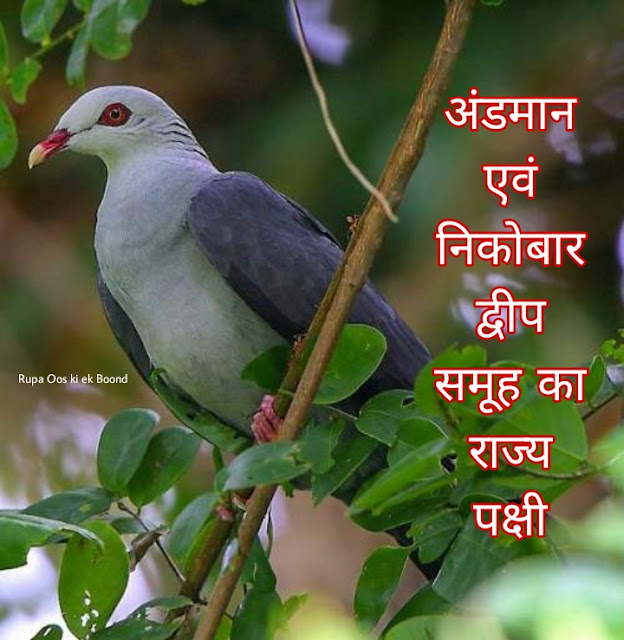
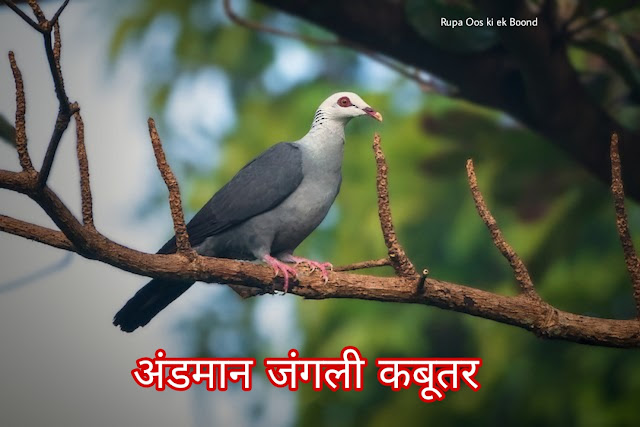
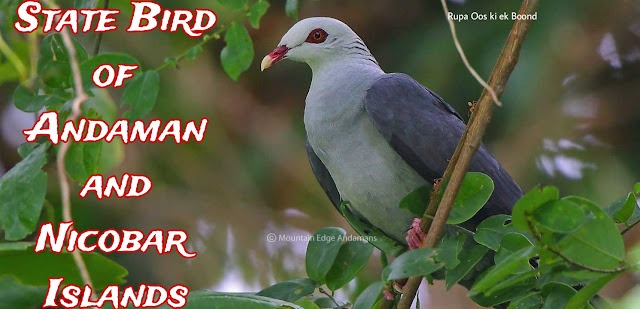
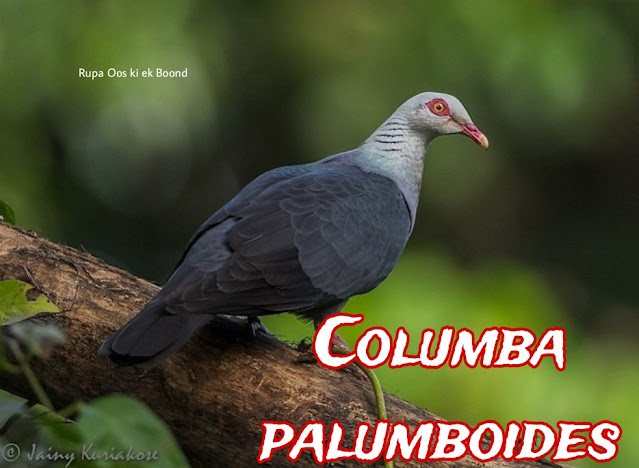
      अंडमान जंगली कबूतर (Columba palumboides)/ अंडमान वुड पिजन ( कोलंबा पालुंबोइड्स )

भारत राज्य के राजकीय पक्षियों के क्रम को आगे बढ़ाते हुए आज चर्चा करते हैं, अंडमान एवं निकोबार द्वीप समूह के राजकीय पक्षी की। यह बहुत ही खूबसूरत चिड़िया है, जिसका नाम अंडमान जंगली कबूतर है। इसका सिर सफेद, लाल पीले नोक वाली चोंच और लाल पंजे होते हैं। इसका बाकी शरीर काला होता है। अंडमान वुड पिजन ( कोलंबा पालुंबोइड्स ) एक बड़ा कबूतर है, जिसकी लंबाई 35 से 40 सेमी और वजन 510 ग्राम से 520 ग्राम होता है।

अंडमान एवं निकोबार द्वीप समूह का राज्य पक्षी (State Bird of Andaman and Nicobar Islands )

ये लकड़ी के कबूतर की प्रजातियाँ भारत के अंडमान और निकोबार द्वीप समूह के लिए स्थानिक हैं। ये अंडमान लकड़ी कबूतर प्रजातियाँ घने चौड़ी पत्तियों वाले सदाबहार जंगलों में निवास करती हैं। ये लकड़ी के कबूतर मोनोटाइपिक प्रजातियां हैं।         

इन पक्षियों का सिर और गर्दन सिल्वर ग्रे रंग के होते हैं। गर्दन का रंग धीरे-धीरे गले, स्तन, पेट और निचले पंखों के हल्के भूरे रंग के साथ विलीन हो जाता है। पीठ, दुम, पंख और पूंछ गहरे काले भूरे रंग की हैं। ऊपरी गहरे भूरे आवरण पर हरी चमक है। चोंच गुलाबी लाल रंग की होती है, जिसका अगला सिरा पीलापन लिए होता है। आईरिस पीले रंग की होती हैं। आंखों के आसपास की नंगी त्वचा लाल-गुलाबी रंग की होती है। पैर लाल गुलाबी रंग के हैं।  इन कबूतरों की आवाज़ एक विशिष्ट हूटिंग "हूह" ध्वनि है।          

अंडमान एवं निकोबार द्वीप समूह का राज्य पक्षी (State Bird of Andaman and Nicobar Islands )

इन अंडमान लकड़ी कबूतर प्रजातियों में उच्च वन निर्भरता है। ये प्रजातियाँ 0 से 100 मीटर की ऊँचाई पर पाई जाती हैं। वे घने चौड़ी पत्ती वाले सदाबहार जंगलों और उष्णकटिबंधीय और उपोष्णकटिबंधीय नम तराई के जंगलों में निवास करते हैं।

इन लकड़ी कबूतर प्रजातियों का आहार ज्यादातर फल हैं। फल, जामुन और अंजीर उनका प्राथमिक भोजन हैं। ये प्रजातियाँ वृक्षवासी हैं, शायद ही कभी जंगल की ज़मीन पर उतरती हैं। वे मितव्ययी हैं, विभिन्न प्रकार के फल, जामुन और अंजीर पर रहते हैं। वे पके फलों की तलाश में एक द्वीप से दूसरे द्वीप तक उड़ते रहते हैं।

IUCN (इंटरनेशनल यूनियन फॉर कंजर्वेशन ऑफ नेचर) ने कबूतर प्रजातियों को वर्गीकृत और मूल्यांकन किया है और इसे "खतरे के निकट" के रूप में सूचीबद्ध किया है। 

English Translate

Andaman Wood Pigeon (Columba palumboides)

Continuing the sequence of state birds of India, today let us discuss the state bird of Andaman and Nicobar Islands. This is a very beautiful bird, whose name is Andaman Wild Pigeon. It has a white head, red beak with yellow tip and red claws. The rest of its body is black. The Andaman wood pigeon (Columba palumboides) is a large pigeon, measuring 35 to 40 cm in length and weighing 510 g to 520 g.

अंडमान एवं निकोबार द्वीप समूह का राज्य पक्षी (State Bird of Andaman and Nicobar Islands )

These wood pigeon species are endemic to the Andaman and Nicobar Islands of India. These Andaman wood pigeon species inhabit dense broad-leaved evergreen forests. These wood pigeons are monotypic species.

The head and neck of these birds are silver gray in color. The neck color gradually merges with the light brown color of the throat, breast, belly and lower wings. The back, rump, wings and tail are dark blackish brown. The dark brown upper coverts have a green sheen. The beak is pinkish red, whose front end is yellow. Iris are yellow in colour. The bare skin around the eyes is red-pink in color. The legs are reddish pink. The call of these pigeons is a distinctive hooting "huh" sound.

These Andaman wood pigeon species have high forest dependence. These species are found at altitudes of 0 to 100 meters. They inhabit dense broadleaf evergreen forests and tropical and subtropical moist lowland forests.

अंडमान एवं निकोबार द्वीप समूह का राज्य पक्षी (State Bird of Andaman and Nicobar Islands )

The diet of these wood pigeon species is mostly fruits. Fruits, berries and figs are their primary food. These species are arboreal, rarely descending to the forest floor. They are frugal, living on a variety of fruits, berries and figs. They fly from one island to another in search of ripe fruits.

The IUCN (International Union for Conservation of Nature) has classified and evaluated the pigeon species and lists it as "near threatened".

भारत के सभी राज्यों के राजकीय पक्षियों की सूची |(List of State Birds of India)

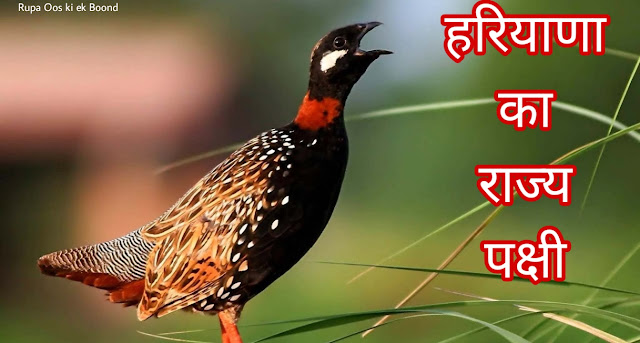
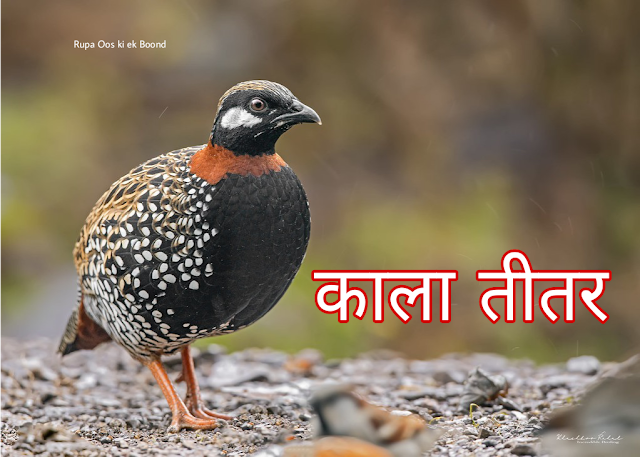
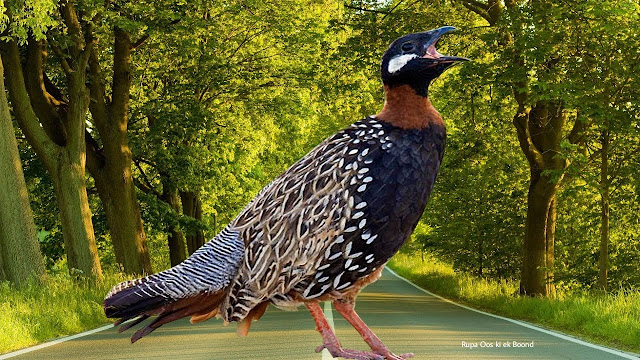
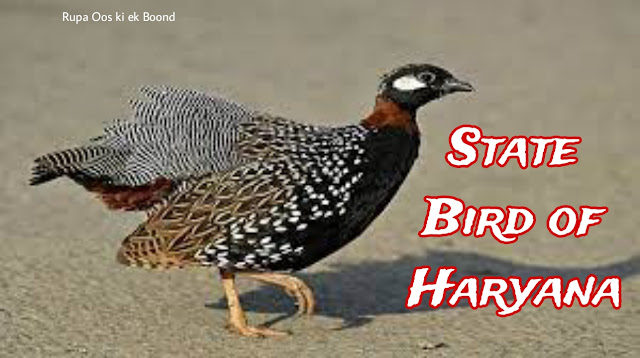
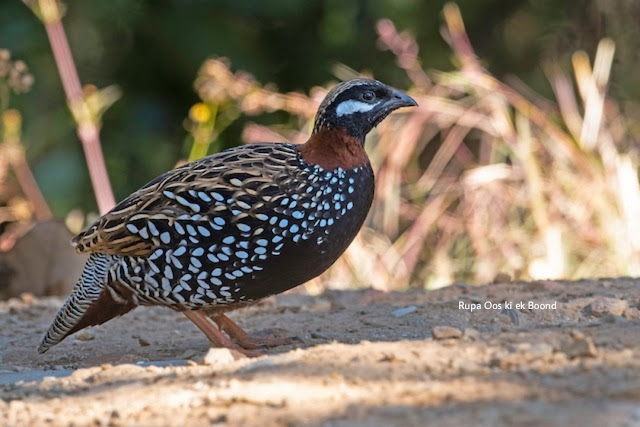
हरियाणा का राज्य पक्षी (State Bird of Haryana) || काला तीतर (Francolinus francolinus)(Black Francolin)

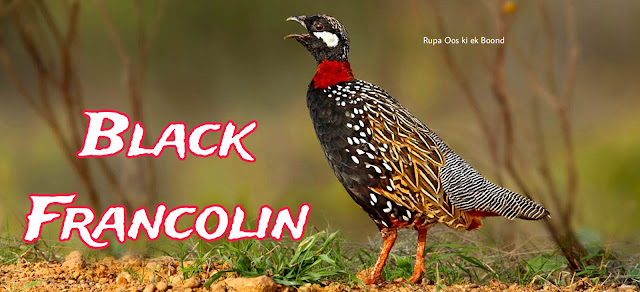
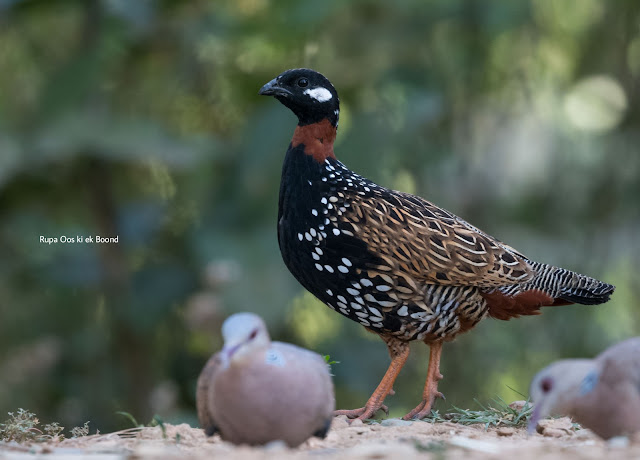
काला तीतर (Francolinus francolinus)(Black Francolin)

भारत राज्य के राजकीय पक्षियों के क्रम को आगे बढ़ाते हुए आज चर्चा करते हैं, हरियाणा के राजकीय पक्षी की। यह बहुत ही खूबसूरत चिड़िया है, जिसका नाम काला तीतर (Black Francolin) है। काला तीतर या काला फ़्रैंकोलिन (Black Francolin), जिसका वैज्ञानिक नाम फ़्रैंकोलिनस फ़्रैंकोलिनस (Francolinus francolinus) है, फ़ीज़ैन्ट कुल का एक पक्षी है। यह अफ़्गानिस्तान, आर्मीनिया, अज़रबैजान, भूटान, साइप्रस, जॉर्जिया, भारत, ईरान, ईराक, इज़्रायल, जॉर्डन, नेपाल, पाकिस्तान, फ़िलिस्तीनी राज्यक्षेत्र, सीरिया, तुर्की और तुर्कमेनिस्तान में पाया जाता है।

हरियाणा का राज्य पक्षी (State Bird of Haryana) || काला तीतर (Francolinus francolinus)(Black Francolin)

काले तीतर का सिर घुमावदार होता है और इसकी आँख की पुतली का रंग भूरा होता है। सिर का अगला भाग भूरा होता है और गला काले रंग का होता है। काले तीतर का आकार 33 से 36 सेंटीमीटर के बीच होता है, एक पूर्ण व्यस्क काले तीतर का वजन 400 से 490 ग्राम होता है। इनके पंखों की चौड़ाई 50 से 56 सेंटीमीटर के बीच होती है। इसका प्रमुख रंग काला होता है - काली छाती, लाल पेट, पँखों पर काले पर सफ़ेद धब्बे और पृष्ठ भाग में सुनहरे भूरे धब्बे होते हैं। यह थोड़ी दूरी तक सीधा ही उड़ सकता है। अपनी उड़ान के दौरान यह पंख फड़फड़ाने के बजाय कभी-कभी पंख फैलाकर भी उड़ता है। इसके पंख गोलाई लिए हुए होते हैं और पूंछ पर सफ़ेद-काली धारियाँ होती हैं। 

हरियाणा का राज्य पक्षी (State Bird of Haryana) || काला तीतर (Francolinus francolinus)(Black Francolin)

काले तीतर मुख्यतः झाड़ियों वाले इलाकों में तथा खेतों में रहना पसंद करते हैं। यह घने जंगलों में रहते हैं, जहां पानी आसपास ही उपलब्ध हो। यह नहरों के आस पास पाए जाने वाले खेतों और जंगलों में पाए जाते हैं। बाँस के जंगल, झाड़ियों वाले जंगल, दलदली जंगल इनके सबसे प्रिय इलाके, यह पक्षी बहुत अधिक शर्मीले होते हैं तथा मनुष्य को देख कर भाग जाते हैं ये हमेशा दो या दो से ज्यादा के झुण्ड में ही देखे जाते हैं। 

हरियाणा का राज्य पक्षी (State Bird of Haryana) || काला तीतर (Francolinus francolinus)(Black Francolin)

काले तीतर उड़ने की बजाय दौड़ना पसंद करते हैं। यह ज्यादा दूर तक नहीं उड़ते हैं और ग्लाइड करते हुए जमीन पर आ जाते हैं। इनकी आवाज बहुत तेज “क्लिक चीक चीक चीरकिक” की तरह होती है। इसका प्रजनन काल अप्रैल से जून तक होता है। यह जमीन पर ही घोसला बनाते हैं। यह घनी झाड़ियों के बीच जमीन में गड्ढा खोदकर घोसला बनाते हैं तथा उसमें अंडे देते हैं। यह एक बार में 6 से 12 अंडे देते हैं। इन के अंडों का रंग ओलिव रंग का होता है जिस पर धब्बे होते हैं। नर काला तीतर तथा मादा दोनों अंडों को 18 से 20 दिन तक सेते हैं तथा अंडे से बच्चे बाहर निकलने पर नर और मादा दोनों ही उनकी देख भाल करतें है। काले तीतर का जीवनकाल 13 से 16 साल का होता है। 

हरियाणा का राज्य पक्षी (State Bird of Haryana) || काला तीतर (Francolinus francolinus)(Black Francolin)

English Translate

Black Pheasant (Francolinus francolinus)(Black Francolin)

Taking forward the sequence of the state birds of the state of India, today we discuss about the state bird of Haryana. This is a very beautiful bird, whose name is Black Francolin. Black Pheasant or Black Francolin, whose scientific name is Francolinus francolinus, is a bird of the pheasant family. It is found in Afghanistan, Armenia, Azerbaijan, Bhutan, Cyprus, Georgia, India, Iran, Iraq, Israel, Jordan, Nepal, Pakistan, the Palestinian Territories, Syria, Turkey, and Turkmenistan.

हरियाणा का राज्य पक्षी (State Bird of Haryana) || काला तीतर (Francolinus francolinus)(Black Francolin)

The head of the black pheasant is curved and the color of its iris is brown. The front part of the head is brown and the throat is black. The size of the black pheasant is between 33 and 36 cm, a fully grown black pheasant weighs 400 to 490 grams. The width of their wings is between 50 to 56 centimeters. Its main color is black - black chest, red belly, black and white spots on the wings and golden brown spots on the back. It can only fly straight for a short distance. During its flight, instead of flapping its wings, it sometimes flies by spreading its wings. Its wings are rounded and there are white-black stripes on the tail.

हरियाणा का राज्य पक्षी (State Bird of Haryana) || काला तीतर (Francolinus francolinus)(Black Francolin)

Black partridges mainly like to live in bushy areas and fields. They live in dense forests, where water is available nearby. These are found in the fields and forests found around canals. Bamboo forests, bushy forests, swampy forests are their favorite areas. These birds are very shy and run away after seeing humans. They are always seen in groups of two or more.

हरियाणा का राज्य पक्षी (State Bird of Haryana) || काला तीतर (Francolinus francolinus)(Black Francolin)

Black partridges prefer to run rather than fly. They do not fly very far and come to the ground gliding. Their sound is very loud like “click cheek cheek chir kick”. Its breeding period is from April to June. They make their nest on the ground only. They make a nest by digging a hole in the ground among dense bushes and lay eggs in it. They lay 6 to 12 eggs at a time. The color of their eggs is olive colored with spots on them. Both the male black pheasant and the female incubate the eggs for 18 to 20 days and when the babies come out of the eggs, both the male and female take care of them. The lifespan of the black pheasant is 13 to 16 years.

भारत के सभी राज्यों के राजकीय पक्षियों की सूची |(List of State Birds of India)

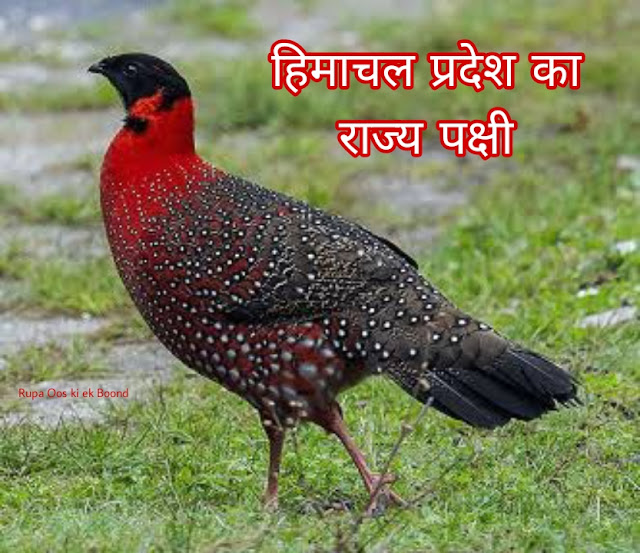
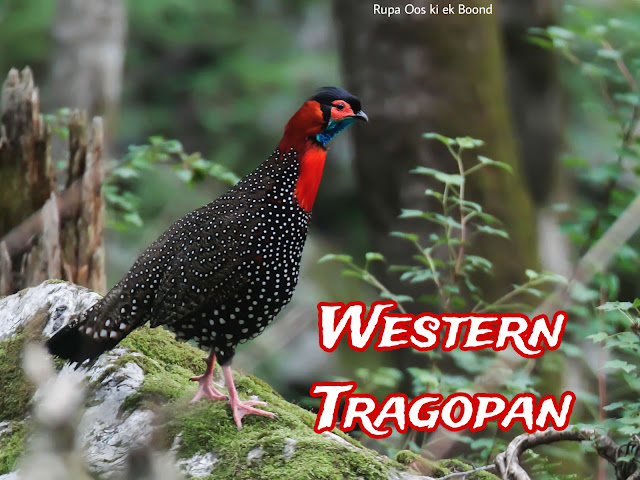
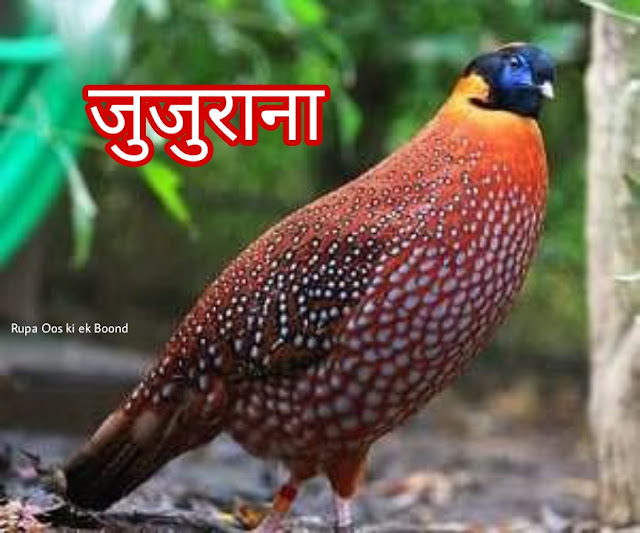
हिमाचल प्रदेश का राज्य पक्षी (State Bird of Himachal Pradesh) || जुजुराना (Tragopan melanocephalus)(WesternTragopan) ||

जुजुराना (Tragopan melanocephalus)(WesternTragopan)

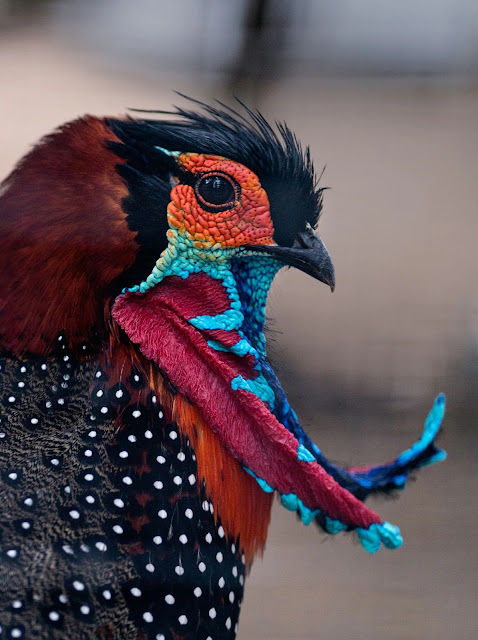
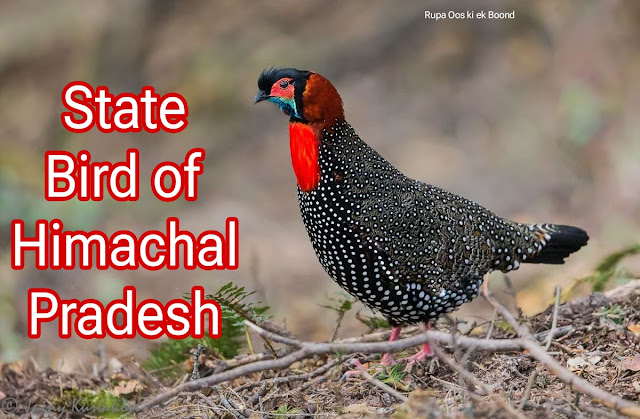
भारत राज्य के राजकीय पक्षियों के क्रम को आगे बढ़ाते हुए आज चर्चा करते हैं, हिमाचल प्रदेश के राजकीय पक्षी की। यह बहुत ही खूबसूरत चिड़िया है, जिसका नाम जुजुराना (WesternTragopan) है। पश्चिमी ट्रैगोपन (Western Tragopan), जेवर या (western horned tragopan, Tragopan melanocephalus) या जुजुराना, उत्तर-पश्चिम हिमालय में पाए जाने वाला एक चमकीले पंखों वाला पक्षी है, जिसकी अनुमानित वैश्विक आबादी 3,500 से भी कम है। इसे 2007 में हिमाचल प्रदेश के राज्य पक्षी का दर्जा दिया गया था।

हिमाचल प्रदेश का राज्य पक्षी (State Bird of Himachal Pradesh) ||  जुजुराना (Tragopan melanocephalus)(WesternTragopan) ||

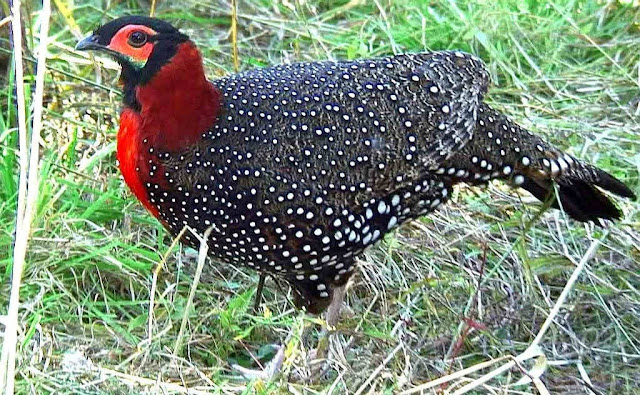
जुजुराना पक्षी के नर मादा में थोड़ा अंतर होता है। मादाओं के ऊपरी हिस्से हल्के भूरे-भूरे रंग के होते हैं, जो बारीकी से वर्मीकेटेड होते हैं और काले रंग के धब्बेदार होते हैं। अधिकांश पंखों पर काले धब्बे और केंद्रीय सफेद धारियाँ होती हैं। अपरिपक्व नर मादाओं से मिलते-जुलते हैं, लेकिन लंबे पैरों के साथ बड़े होते हैं और सिर पर अलग-अलग मात्रा में काला और गर्दन पर लाल रंग होता है।

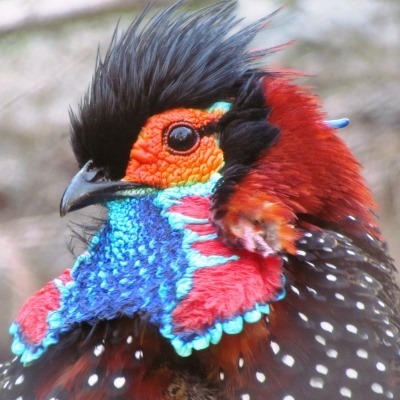
नर बहुत गहरे, भूरे और काले रंग का होता है और उस पर कई सफेद धब्बे होते हैं, प्रत्येक धब्बे की सीमा गर्दन के किनारों और पीछे काले और गहरे लाल रंग के धब्बों से होती है। गला खुला है और त्वचा नीली है जबकि चेहरे की खुली त्वचा लाल है। उनके पास एक छोटी काली पश्चकपाल शिखा है। 

हिमाचल प्रदेश का राज्य पक्षी (State Bird of Himachal Pradesh) ||  जुजुराना (Tragopan melanocephalus)(WesternTragopan) ||

नर का वजन 1.8-2.2 किलोग्राम (4.0-4.9 पाउंड) और मादाओं का वजन 1.25-1.4 किलोग्राम (2.8-3.1 पाउंड) होता है। नर की लंबाई 55-60 सेमी (22-24 इंच) होती है जबकि मादा की लंबाई 48-50 सेमी (19-20 इंच) होती है।

इन पक्षियों की पाकिस्तान में कोहिस्तान और काघन घाटी और भारत के किश्तवाड़, चंबा और कुल्लू जिलों के साथ-साथ भारत में सतलुज नदी के पूर्व के क्षेत्र से पांच आबादी ज्ञात है। वे 1,750 से 3,600 मीटर की ऊंचाई पर पाए जाते हैं, जो गर्मियों में और अधिक ऊंचाई पर पहुंच जाते हैं। उनका पसंदीदा निवास स्थान समशीतोष्ण, उप-अल्पाइन और चौड़ी पत्ती वाले जंगलों का घना मैदान है।

हिमाचल प्रदेश का राज्य पक्षी (State Bird of Himachal Pradesh) ||  जुजुराना (Tragopan melanocephalus)(WesternTragopan) ||

यह गर्मियों में 2,400 और 3,600 मीटर के बीच ऊपरी समशीतोष्ण जंगलों में रहता है, और सर्दियों में, 2,000 और 2,800 मीटर की ऊंचाई के बीच घने शंकुधारी और चौड़ी पत्ती वाले जंगलों में रहता है। पश्चिमी ट्रैगोपैन अधिकतर वृक्षीय है लेकिन जमीन पर भोजन के लिए उतरता है। वे ज्यादातर पत्तियों, अंकुरों और बीजों पर भोजन करते हैं, लेकिन कीड़े और अन्य अकशेरुकी जीवों का भी सेवन करते हैं। अधिकांश तीतरों की तरह, वे घोंसला बनाने के समय को छोड़कर पेड़ों पर अकेले या जोड़े में निवास करते हैं। वे मानवजनित अशांति के प्रति संवेदनशील हैं और अशांत आवासों (उदाहरण के लिए, जल-विद्युत परियोजना विकास स्थल) से बचते हैं।

पश्चिमी ट्रैगोपैन को सभी जीवित तीतरों में सबसे दुर्लभ माना जाता है। इसका दायरा बहुत सीमित है। कश्मीर घाटी में इसे डांगीर, चंबा में फुल्गर और कुल्लू घाटी में जुजुराना ("पक्षियों का राजा") के नाम से जाना जाता है। हिमाचल प्रदेश में लोग वेस्टर्न ट्रैगोपन ((Western Tragopan) को ‘पक्षियों का राजा’ भी कहते हैं। कश्मीर में इसे दानगीर (Dangir) के नाम से जाना जाता है।

हिमाचल प्रदेश का राज्य पक्षी (State Bird of Himachal Pradesh) ||  जुजुराना (Tragopan melanocephalus)(WesternTragopan) ||

पश्चिमी ट्रैगोपैन की आबादी को इसके पूरे क्षेत्र में कई मानवजनित कारकों से खतरा है। अनुमान है कि विश्व की आबादी 5,000 से कम है, जिसमें हिमाचल प्रदेश में बंदी प्रजनन आबादी भी शामिल है, जिसकी संख्या 2012 में दस जोड़े से भी कम थी। सीआईटीईएस ने इसके पंखों की बिक्री को हतोत्साहित करने के लिए इस प्रजाति को परिशिष्ट I में सूचीबद्ध किया है। 

यह एक लुप्तप्राय पक्षी है और हिमालय पर्वतमाला के कारण भारत में हिमाचल प्रदेश के लिए थोड़ा विशिष्ट है। यह उत्तराखंड में भी पाया जाता है। अत्यधिक लुप्तप्राय प्रजातियों के कारण, हिमाचल प्रदेश ने जुजुराना (Jujurana) को वन्यजीव संरक्षण अधिनियम की अनुसूची I में रखा। जिससे इसकी रक्षा की जा सके।

English Translate

Jujurana (Tragopan melanocephalus)(WesternTragopan)

Taking forward the order of the state birds of the state of India, today we discuss about the state bird of Himachal Pradesh. This is a very beautiful bird, whose name is Jujurana (Western Tragopan). The Western Tragopan, Jewar or (western horned tragopan, Tragopan melanocephalus) or Jujurana, is a bright-winged bird found in the northwestern Himalayas, with an estimated global population of less than 3,500. It was given the status of the state bird of Himachal Pradesh in 2007.

There is little difference between male and female Jujurana bird. The upperparts of the females are pale greyish-brown, thinly vermiculated and speckled with black. There are dark spots and central white stripes on most of the wings. Immature males resemble females but are larger with longer legs and have varying amounts of black on the head and red on the neck.

हिमाचल प्रदेश का राज्य पक्षी (State Bird of Himachal Pradesh) ||  जुजुराना (Tragopan melanocephalus)(WesternTragopan) ||

The male is very dark, brown and black in color and has several white spots, each spot bordered by black and dark red spots on the sides and back of the neck. The throat is exposed and the skin is blue while the exposed skin of the face is red. They have a small black occipital crest.

Males weigh 1.8–2.2 kg (4.0–4.9 lb) and females weigh 1.25–1.4 kg (2.8–3.1 lb). Males are 55–60 cm (22–24 in) in length while females are 48–50 cm (19–20 in) in length.

Five populations of these birds are known from the Kohistan and Kaghan Valley in Pakistan and the Kishtwar, Chamba and Kullu districts of India, as well as the area east of the Sutlej River in India. They are found at altitudes of 1,750 to 3,600 metres, reaching higher altitudes in summer. Their preferred habitat is thickets of temperate, sub-alpine and broad-leaf forests.

It lives in upper temperate forests between 2,400 and 3,600 m in summer, and in winter, in dense coniferous and broad-leaf forests between 2,000 and 2,800 m altitude. The western tragopan is mostly arboreal but descends to the ground to feed. They feed mostly on leaves, shoots and seeds, but also consume insects and other invertebrates. Like most pheasants, they roost alone or in pairs in trees except during nesting time. They are sensitive to anthropogenic disturbance and avoid disturbed habitats (for example, hydro-electric project development sites).

हिमाचल प्रदेश का राज्य पक्षी (State Bird of Himachal Pradesh) ||  जुजुराना (Tragopan melanocephalus)(WesternTragopan) ||

The western tragopan is considered the rarest of all living pheasants. Its scope is very limited. It is known as Dangir in Kashmir Valley, Fulgar in Chamba and Jujurana ("King of Birds") in Kullu Valley. People in Himachal Pradesh also call Western Tragopan the 'King of Birds'. In Kashmir it is known as Dangir.

The western tragopan population is threatened by a number of anthropogenic factors throughout its range. The world population is estimated to be less than 5,000, including a captive breeding population in Himachal Pradesh, which numbered less than ten pairs in 2012. CITES has listed this species on Appendix I to discourage the sale of its fins.

हिमाचल प्रदेश का राज्य पक्षी (State Bird of Himachal Pradesh) ||  जुजुराना (Tragopan melanocephalus)(WesternTragopan) ||

It is an endangered bird and is a bit specific to Himachal Pradesh in India due to the Himalayan ranges. It is also found in Uttarakhand. Due to the highly endangered species, Himachal Pradesh placed Jujurana in Schedule I of the Wildlife Protection Act. So that it can be protected.

भारत के सभी राज्यों के राजकीय पक्षियों की सूची |(List of State Birds of India)

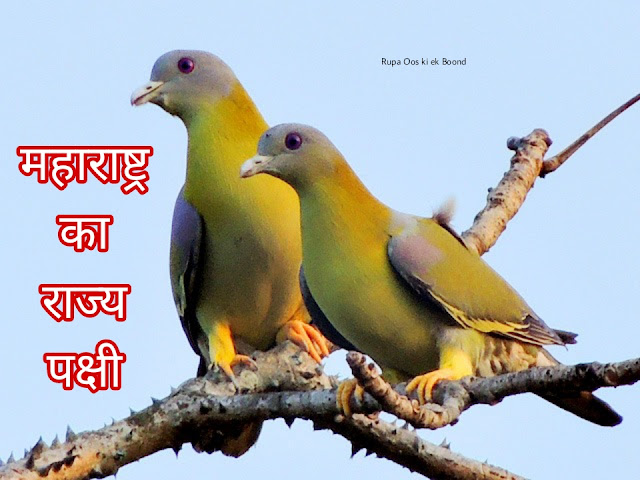
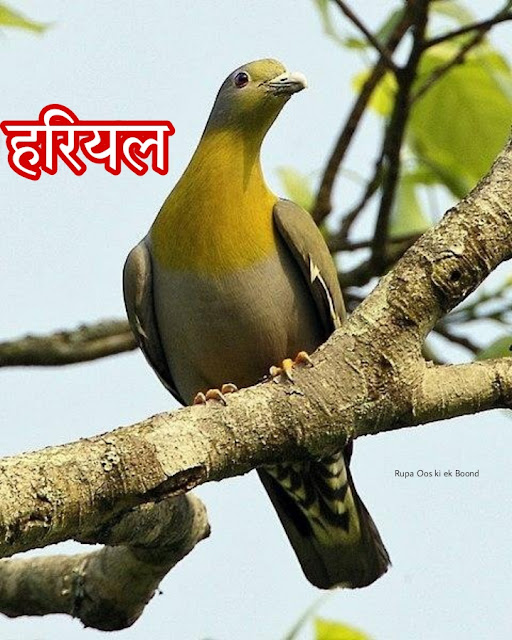
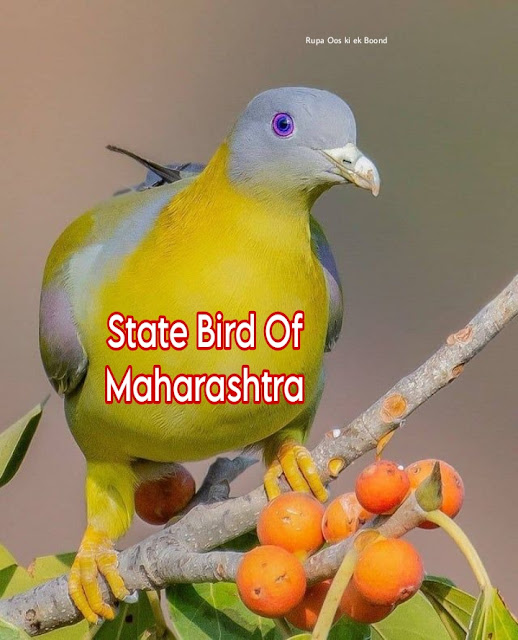
महाराष्ट्र का राज्य पक्षी (State Bird of Maharastra ) || हरियल (Treron phoenicoptera) (Yellow-footed Green-Pigeon)

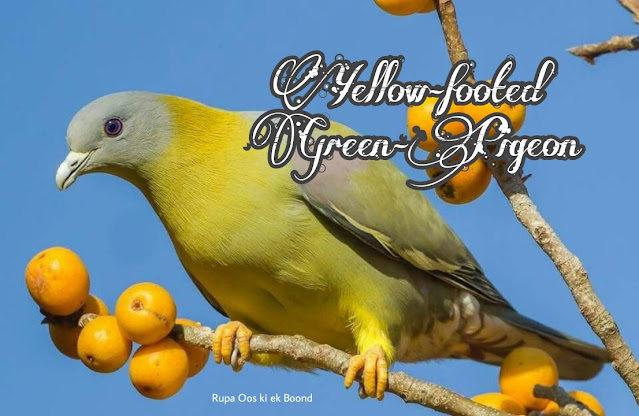
हरियल (Treron phoenicoptera)(Yellow-footed Green-Pigeon)

आज मिलते हैं एक और बेहद खूबसूरत चिड़िया से जो महाराष्ट्र का राज्य की राज्य पक्षी है, इसका नाम है ‘हरियल पक्षी’ (Hariyal Pakshi)। हर राज्य का राजकीय पशु, पक्षी, वृक्ष, पुष्प आदि होते हैं, जिनमें से पिछले कुछ अंकों से हम राज्य के राजकीय पक्षी की चर्चा कर रहे हैं। इसी क्रम में आज महाराष्ट्र के राजकीय पक्षी की चर्चा करेंगे। 

महाराष्ट्र  का राज्य पक्षी  (State Bird of Maharastra ) || ‘हरियल पक्षी’ (Hariyal Pakshi) ||

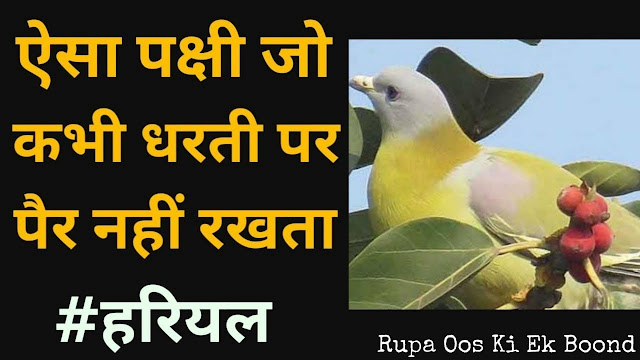
हर राज्यों की तरह महाराष्ट्र द्वारा भी राज्य का राजकीय पक्षी चुना गया है। यह पक्षी दिखने में बेहद सुंदर है और ऊँचे पेड़ों पर निवास करता है। इसकी विशेष बात ये है कि ये कभी जमीन पर नहीं उतरता। वर्ष 1985 में इंडियन बोर्ड ऑफ़ वाइल्ड लाइफ द्वारा भारत के राज्यों और केंद्र शासित प्रदेशों को आदेश दिया कि वे अपने राज्य का राजकीय पशु, पक्षी, वृक्ष, पुष्प आदि घोषित करें। कई राज्यों के इस प्रक्रिया में रूचि दिखाई, कईओं ने नहीं दिखाई।

हरियल पक्षी कबूतर की तरह दिखने वाला पक्षी है। इसका रंग हल्का हरा-पीला होता है। रंग के कारण ही इसे ‘हरियल पक्षी’ कहा जाता है। इसके सिर के ऊपर हल्के नीले भूरे रंग के बाल होते हैं। इसक आकार 29 से.मी से 33 सेमी और वजन 225 ग्राम से 260 ग्राम होता है। इसके पंखों का फैलाव 17 सेमी से 19 सेमी होता है। इसकी आँखों का रंग काला होता है। आँखों के आसपास लाल रंग की रिंग होती हैं तथा पैर चमकीले पीले रंग के होते हैं। नर मादा दिखने में एक जैसे होते हैं। बस नर की तुलना में मादा थोड़ी सुस्त होती है। 

महाराष्ट्र  का राज्य पक्षी  (State Bird of Maharastra ) || ‘हरियल पक्षी’ (Hariyal Pakshi) ||

हरियल पक्षी मुख्यतः भारतीय उपमहाद्वीप में पाया जाने वाला पक्षी हैं। यह पक्षी भारत, श्रीलंका, पाकिस्तान, बर्मा, नेपाल, बांग्लादेश के अतिरिक्त कंबोडिया, चीन में भी पाया जाता है। भारत में यह उत्तरी-पश्चिम रेगिस्तानी क्षेत्र को छोड़कर संपूर्ण भारत में पाए जाते हैं। भारत में हिमालय से लेकर कन्याकुमारी तक और राजस्थान से लेकर पूर्व में असम तक पाये जाते हैं। यह महाराष्ट्र का राजकीय पक्षी है, लेकिन उत्तर प्रदेश में बहुतायत में पाया जाता है। 

हरियल पक्षी सदाबहार जंगलों में रहते हैं। इन्हें ऊँचे-ऊँचे पेड़ों वाले जंगलों में रहना पसंद है। ये पीपल या बरगद के पेड़ पर तिनकों और पत्तियों से अपना घोंसला बनाता है। हरियल पक्षी पूर्णतः शाकाहारी होता है। यह कई प्रकार के फल खाते हैं। अनाज के दाने भी खाते हैं। कई प्रकार के फूलों की कलियाँ, छोटे पौधों के अंकुर और बीज खाना पसंद करते हैं। हरियल पक्षी पके फल बड़े चाव से खाते हैं और फल खाते समय कलाबाजियां भी करते हैं। इसके पीपल से लेकर बड, गूलर, अंजीर के पेड़ों के पत्ते  खाते हैं। यह बहुत खाऊ पक्षी है और इसे बेर, चिरौंजी जामुन के फल ज्यादा पसंद हैं। 

महाराष्ट्र  का राज्य पक्षी  (State Bird of Maharastra ) || ‘हरियल पक्षी’ (Hariyal Pakshi) ||

हरियल पक्षी के बारे में रोचक तथ्य 

  1. हरियक पक्षी जमीन पर बहुत कम उत्तरते हैं और सारा जीवन पेड़ पर बिता देते हैं। इन्हें पतझड़ या सदाबहार जंगलों के पेड़ ज्यादा पसंद होते हैं।
  2. हरियल पक्षी की सबसे विशेष बात ये है कि ये कभी जमीन पर पैर नहीं रखता। यदि इसे कभी जमीन पर उतरना भी पड़े, तो ये अपने पैरों में लकड़ी का टुकड़ा लेकर उतरता है। 
  3. ये पानी पीने के लिए भी जमीन पर नहीं उतरता, बल्कि फलों और पत्तियों पर जमी ओंस से ही अपनी प्यास बुझा लेता है। 
  4. हरियल पक्षी बहुत शर्मीला पक्षी है, जो इंसान को देखते ही चुप्पी साध लेता है। 
  5. हरियल पक्षी का जीवनकाल 26 वर्ष होता है।
  6. हरियल पक्षी आजीवन एक ही साथी के साथ जीवन व्यतीत करते हैं। 
  7. कबूतर की तरह हरियल पक्षी एक सामाजिक पक्षी है और समूह में रहते हैं। इनका छोटा समूह 5 से 10 पक्षियों का होता है। ये समूह में उड़ान भरते हैं। 
  8. हरियल पक्षी की आवाज़ सीटी जैसी मधुर होती है।
  9. हरियल पक्षी प्रजनन काल मार्च से जून तक होता है।
  10. मादा हरियल पक्षी एक बार में 1 या 2 अंडे देती है।
  11. हरियल पक्षी के अंडे चिकने और लीची के आकार के होते हैं तथा चमकीले सफ़ेद रंग के होते हैं।
  12. नर और मादा दोनों अंडों की देखभाल करते हैं। ये अंडों को 13 दिन तक सेते हैं।
  13. हरियल पक्षी का मांस नरम होता है, जिसके कारण इसका अधिक शिकार होता है।
  14. हरियल पक्षी विलुप्तप्राय जीवों की श्रेणी में शामिल है। 
English Translate

Yellow-footed Green-Pigeon (Treron phoenicoptera)

Today we meet another very beautiful bird which is the state bird of Maharashtra, its name is 'Hariyal Pakshi'. Every state has its state animal, bird, tree, flower, etc., out of which we are discussing the state bird from the last few points. In this sequence, today we will discuss about the state bird of Maharashtra.
महाराष्ट्र  का राज्य पक्षी  (State Bird of Maharastra ) || ‘हरियल पक्षी’ (Hariyal Pakshi) ||

Like every state, Maharashtra has also chosen the state bird as its state bird. This bird is very beautiful in appearance and lives on tall trees. Its special thing is that it never lands on the ground. In the year 1985, the Indian Board of Wild Life ordered the states and union territories of India to declare their state animal, bird, tree, flower etc. Many states showed interest in this process, many did not.

Harial bird is a pigeon-like bird. Its color is light greenish-yellow. Because of its colour, it is called the 'green bird'. It has light blue brown hair on top of its head. Its size is 29 cm to 33 cm and weight is 225 grams to 260 grams. The spread of its wings is 17 cm to 19 cm. The color of its eyes is black. There are red rings around the eyes and the legs are bright yellow. Males are similar in appearance to females. The female is just a bit duller than the male.

Harial birds are mainly birds found in the Indian subcontinent. Apart from India, Sri Lanka, Pakistan, Burma, Nepal, Bangladesh, this bird is also found in Cambodia, China. In India, it is found all over India except the north-west desert region. In India, it is found from the Himalayas to Kanyakumari and from Rajasthan to Assam in the east. It is the state bird of Maharashtra, but is found in abundance in Uttar Pradesh.

Harial birds live in evergreen forests. They like to live in forests with tall trees. It builds its nest on a Peepal or Banyan tree with straws and leaves. Harial bird is completely vegetarian. It eats many types of fruits. They also eat grain grains. Likes to eat buds of many types of flowers, shoots and seeds of small plants. Harial birds eat ripe fruits with great gusto and also do acrobatics while eating fruits. From its peepal to bud, sycamore, leaves of fig trees are eaten. It is a very voracious bird and likes the fruits of ber, chironji jamun more.
महाराष्ट्र  का राज्य पक्षी  (State Bird of Maharastra ) || ‘हरियल पक्षी’ (Hariyal Pakshi) ||

interesting facts about green bird

  1. Hariyak birds answer very little on the ground and spend their whole life on the tree. They like trees of autumn or evergreen forests more.
  2. The most special thing about the green bird is that it never sets foot on the ground. If it ever has to land on the ground, it lands with a piece of wood in its feet.
  3. It does not descend to the ground even to drink water, but quenches its thirst only by the dew on fruits and leaves.
  4. Harial bird is a very shy bird, which takes silence on seeing a human being.
  5. The life span of Hariyal bird is 26 years.
  6. Harial birds spend life with only one partner.
  7. Harial birds like pigeons are a social bird and live in groups. Their small group is of 5 to 10 birds. They fly in groups.
  8. Hariyal bird's voice is as sweet as a whistle.
  9. Harial bird breeding season is from March to June.
  10. The female green bird lays 1 or 2 eggs at a time.
  11. The eggs of the Hariyal bird are smooth and litchi shaped and are bright white in colour.
  12. Both the male and the female take care of the eggs. They incubate the eggs for 13 days.
  13. The meat of Harial bird is soft, due to which it is more hunted.
  14. The green bird is included in the category of endangered species.

मणिपुर और मिज़ोरम का राज्य पक्षी (State Bird of Manipur ) || नांगयिन ( Nongin/Syrmaticus humiae) ||

मणिपुर और मिजोरम का राज्य पक्षी  (State Bird of Manipur & Mizoram)

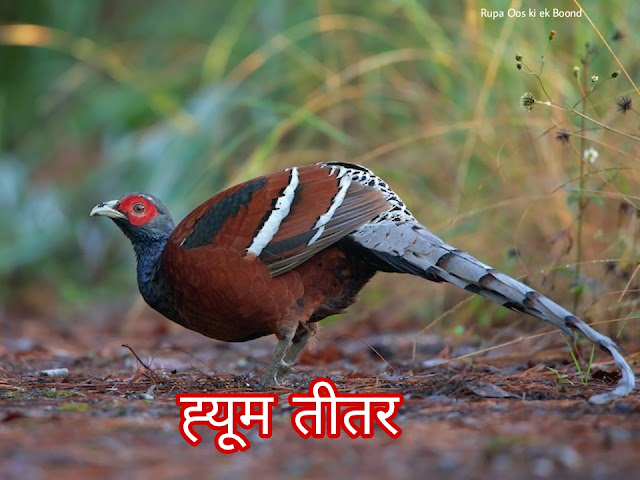
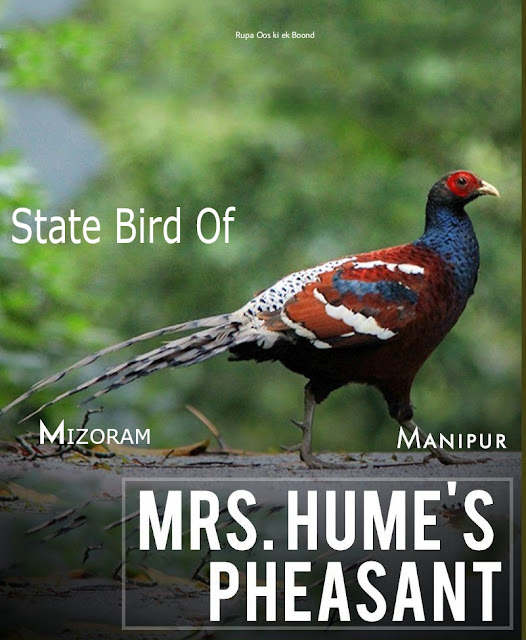
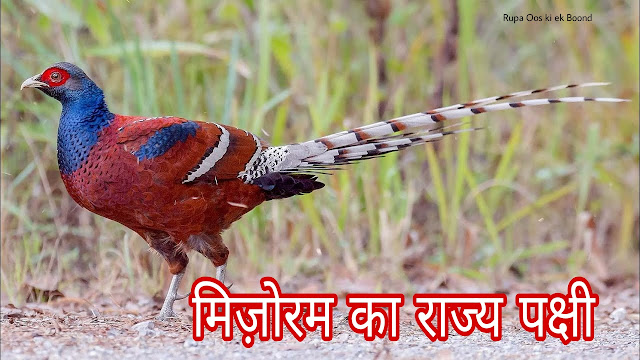
जब हम छोटे होते हैं तो हमारे मन में एक बार यह ख्याल जरूर आता है कि काश हमारे पास भी पंख होते और हम नीले आकाश में इन पंछियों की तरह स्वच्छंद उड़ते। चिड़ियों की रंग बिरंगी दुनिया और उनका स्वच्छंद नीले गगन में उड़ना मन को प्रफुल्लित कर जाता है। खैर, आते हैं धरती पर और चर्चा करते हैं मणिपुर के राजकीय पक्षी की जिसका नाम नॉगिन (धारीदार पूँछ वाला तीतर या ह्यूम तीतर) है। नोंगिन को बार-टेल्ड तीतर या ह्यूम तीतर के नाम से भी जाना जाता है।

मणिपुर और मिज़ोरम का राज्य पक्षी  (State Bird of Manipur & Mizoram)

नोंगिन ( सिरमैटिकस हुमिया ), एक शानदार पक्षी को 1989 में मणिपुर का राज्य पक्षी घोषित किया गया था।  यह भारतीय राज्य मणिपुर और मिज़ोरम का भी राज्य पक्षी है। श्री एलन ऑक्टेवियन ह्यूम की पत्नी श्रीमती एओ ह्यूम के सम्मान में इस पक्षी का नाम मिसेज ह्यूम तीतर भी रखा गया है। श्री ह्यूम उन्नीसवीं सदी के सबसे प्रभावशाली पक्षी विज्ञानी थे और उन्होंने 1881 में मणिपुर में अपने अभियान के दौरान इस पक्षी को वैज्ञानिक रूप से रिकॉर्ड किया था।

धारीदार पूँछ वाला यह तीतर या ह्यूम तीतर (अंग्रेजी नाम: Mrs. Hume's pheasant; द्विपद नाम: Syrmaticus humiae), भारत के पूर्वोत्तर हिमालय तथा चीन, म्यांमार तथा थाइलैंड में पाया जाने वाला तीतर प्रजाति का पक्षी है। 

मणिपुरी में नोंगिन का अर्थ वह है जो बारिश के रास्ते का अनुसरण करता है। ' नोंग ' का अर्थ है बारिश और ' इन ' का अर्थ है अनुसरण करना। नोंगिन एक विशाल वन तीतर है, जिसका सिर भूरा-भूरा, नंगी लाल चेहरे की त्वचा, शाहबलूत-भूरा पंख, पीली चोंच, भूरा-नारंगी परितारिका, सफेद पंख पट्टियाँ और धात्विक नीले गर्दन पंख होते हैं, जिनकी लंबाई 90 सेमी तक हो सकती है। नर की एक लंबी भूरे रंग की सफेद पूंछ होती है, जिसमें काले और भूरे रंग की धारियां होती हैं। मादा एक शाहबलूत भूरे रंग की पक्षी है, जिसकी पूंछ सफेद होती है और गर्दन पीली होती है। 

मणिपुर और मिज़ोरम का राज्य पक्षी  (State Bird of Manipur & Mizoram)

इसका आहार मुख्य रूप से पौधों की सामग्री से बना होता है। मादा द्वारा पत्तियों, टहनियों और पंखों के घोंसले में तीन से बारह मलाईदार सफेद अंडे दिए जाते हैं। जहाँ इसे क्रमश: नांगयिन (मणिपुरी) और वावु (मिज़ो भाषा) नाम से जाना जाता है। लगातार हो रही पर्यावास हानि, विरल आबादी और शिकार के कारण, इस तीतर का मूल्यांकन IUCN की लाल सूची में संकटासन्न के रूप में किया गया है। यह CITES के परिशिष्ट I पर सूचीबद्ध है। 

English Translate

State Bird of Manipur & Mizoram

When we are small, once in our mind this thought definitely comes that I wish we too had wings and we could fly freely like these birds in the blue sky. The colorful world of birds and their free flight in the blue sky makes the mind happy. Well, let's come down to earth and discuss the state bird of Manipur called Noggin (Striped Tailed Pheasant or Hume Pheasant). Nongin is also known as Bar-tailed Pheasant or Hume Pheasant.

मणिपुर और मिज़ोरम का राज्य पक्षी  (State Bird of Manipur & Mizoram)

Nongin (Syrmaticus humia), a spectacular bird was declared the state bird of Manipur in 1989. It is also the state bird of the Indian states of Manipur and Mizoram. The bird is also named Mrs Hume's Pheasant in honor of Mrs AO Hume, wife of Mr Allan Octavian Hume. Mr. Hume was the most influential ornithologist of the nineteenth century and scientifically recorded this bird during his expedition to Manipur in 1881.

This striped-tailed pheasant or Hume pheasant (English name: Mrs. Hume's pheasant; binomial name: Syrmaticus humiae), is a pheasant species found in the northeastern Himalayas of India and China, Myanmar and Thailand.

Nongin in Manipuri means one who follows the path of rain. 'Nong' means rain and 'in' means to follow. The nongin is a large forest pheasant, with a greyish-brown head, bare red facial skin, chestnut-brown plumage, yellow beak, brownish-orange iris, white wing bars and metallic blue neck feathers, which can be up to 90 cm in length. Is. The male has a long greyish white tail, with black and brown streaking. The female is a chestnut brown bird with a white tail and a yellow neck.

मणिपुर और मिज़ोरम का राज्य पक्षी  (State Bird of Manipur & Mizoram)

Its diet is mainly composed of plant material. Three to twelve creamy white eggs are laid by the female in a nest of leaves, twigs and feathers. Where it is known as Nangyin (Manipuri) and Vavu (Mizo language) respectively. Due to ongoing habitat loss, sparse populations and hunting, this pheasant is assessed as Endangered on the IUCN Red List. It is listed on Appendix I of CITES.
भारत के सभी राज्यों के राजकीय पक्षियों की सूची |(List of State Birds of India)

पश्चिम बंगाल का राज्य पक्षी (State Bird of West Bangal) || श्वेतग्रीवा किलकिला ( White-throaterd kingfishe) || Halcyon smyrnensis ||

पश्चिम बंगाल का राज्य पक्षी (State Bird of West Bangal)

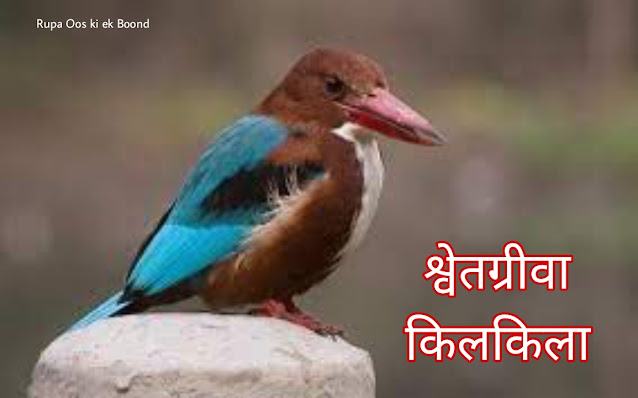
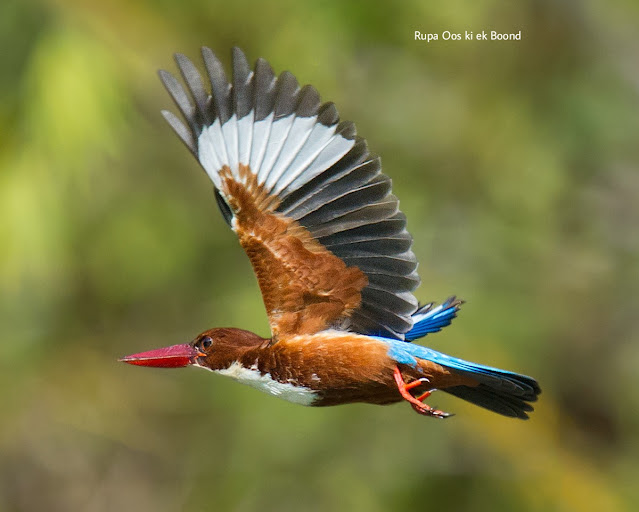
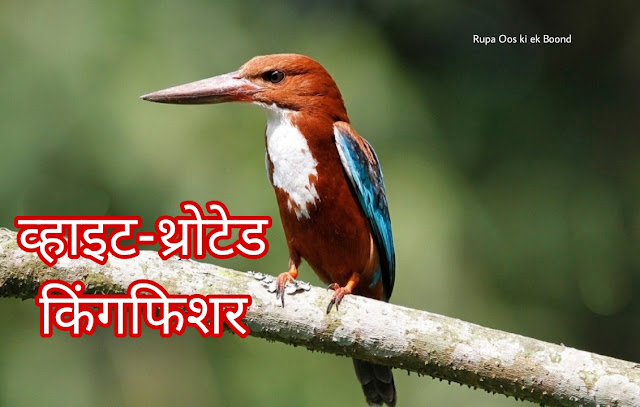
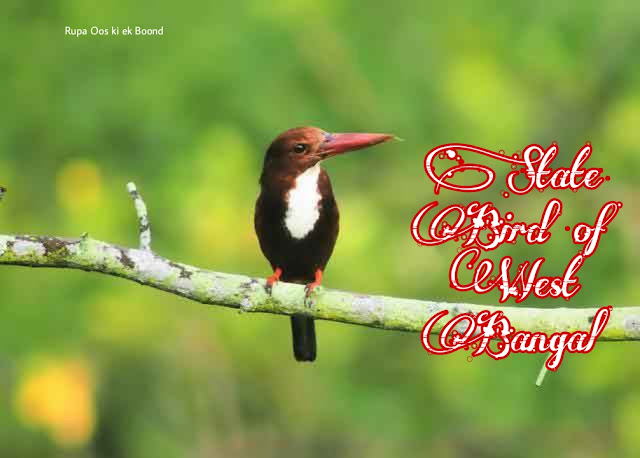
आज की पोस्ट छोटी सी खूबसूरत चिड़िया की जो पश्चिम बंगाल का राज्य पक्षी है, व्हाइट-थ्रोटेड किंगफिशर (श्वेतग्रीवा किलकिला)( हैल्सियॉन स्मिरनेंसिस) है। व्हाइट-ब्रेस्टेड किंगफिशर ( हेल्सीओन स्मिरनेंसिस ), जिसे अक्सर व्हाइट-थ्रोटेड किंगफिशर के रूप में जाना जाता है, श्वेतग्रीवा किलकिला यह बहुतायता से पेड़ों का रहिवासी पक्षी है, जो अपने कुटुंब के अन्य पक्षियों की तरह नदी अथवा ताल तल्लैयों के किनारों के पास नहीं भी रहा तो उसे ज्यादा फरक नहीं पड़ता, सिर्फ उसे खाने के लिए बहुत सा अन्न, जैसे कीड़े मकोड़े, केकड़े और छोटे चूहे मिल जाएं।

पश्चिम बंगाल का राज्य पक्षी (State Bird of West Bangal) || श्वेतग्रीवा किलकिला ( White-throaterd kingfishe) || Halcyon smyrnensis ||

यह ज्यादातर खेत-खलियान, जंगल, बाग़-बगीचे तथा मीठा पानी और तटीय आर्द्रभूमि के पास दिखता है। यह जंतु जगत के कोर्डेटा (Chordata) संघ का जीव है, जो अल्सिडीनिड़े (Alcedinidae) कुटुंब से है। इसका वैज्ञानिक नाम है हाल्सियोन स्मिरनेन्सिस (Halcyon Smyrnensis) है। हाल्सियोन यह नाम यूनानी पुराण में किलकिले जैसे पक्षी का था।

पश्चिम बंगाल का राज्य पक्षी (State Bird of West Bangal) || श्वेतग्रीवा किलकिला ( White-throaterd kingfishe) || Halcyon smyrnensis ||

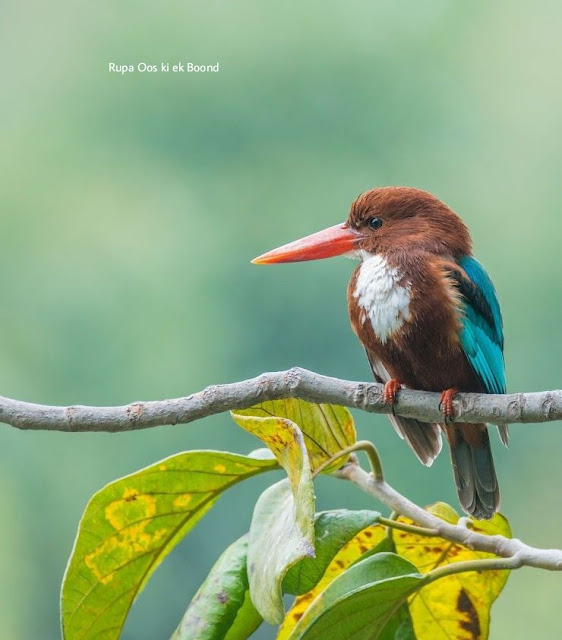
वयस्क की पीठ, पंख और पूंछ चमकीली नीली होती है। इसका सिर, कंधे, बाजू और निचला पेट शाहबलूत रंग का है, और गला और स्तन सफेद हैं। बड़ी चोंच और टांगें चमकदार लाल हैं। सफेद गले वाले किंगफिशर की उड़ान तेज़ और सीधी होती है, छोटे गोलाकार पंख फड़फड़ाते हैं। उड़ान में, नीले और काले पंखों पर बड़े सफेद धब्बे दिखाई देते हैं। लिंग समान होते हैं।  

पश्चिम बंगाल का राज्य पक्षी (State Bird of West Bangal) || श्वेतग्रीवा किलकिला ( White-throaterd kingfishe) || Halcyon smyrnensis ||

श्वेतग्रीवा किलकिला के गले और छाती का भाग सफ़ेद रहता है, इसीलिए इसे श्वेतग्रीवा कहते हैं। इसका सर भूरे रंग का होता है तथा पंख फ़िरोजी रंग के होते हैं। इसके अंडे देने का समय मार्च से जून तक रहता है। एक बार में वे 4-7 अंडे देते हैं। अंडे सेने में 20-22 दिन लगते हैं, जबकि चूजे 19 दिनों में निकल जाते हैं। इनका घोंसला एक सुरंग जैसा होता है। श्वेतग्रीवा किलकिला बहुत ही शोर मचाता है और समागम के समय भी यह ज्यादा बोलता है तथा तब इसकी आवाज़ मधुर हो जाती है।

पश्चिम बंगाल का राज्य पक्षी (State Bird of West Bangal) || श्वेतग्रीवा किलकिला ( White-throaterd kingfishe) || Halcyon smyrnensis ||

पश्चिम बंगाल के इस राज्य पक्षी का पहले उसके पंखों के लिए शिकार किया जाता था। श्वेतग्रीवा किलकिला बड़े पैमाने पर भारत के बहुत से हिस्सों में दिखता है। 

 English Translate

State Bird of West Bengal


Today's post is about a beautiful little bird which is the state bird of West Bengal, White-throated Kingfisher (Shvetagriva kilkila)( Halcyon smirnensis). The white-breasted kingfisher (Halcion smirnensis), often known as the white-throated kingfisher, is an abundant arboreal bird that, like other birds in its family, does not live near river or pond banks, as long as it has plenty of food to eat, such as insects, crabs, and small mice.

पश्चिम बंगाल का राज्य पक्षी (State Bird of West Bangal) || श्वेतग्रीवा किलकिला ( White-throaterd kingfishe) || Halcyon smyrnensis ||

It is mostly seen near fields, forests, gardens and sweet water and coastal wetlands. It is an organism of the Chordata union of the animal world, which belongs to the Alcedinidae family. Its scientific name is Halcyon Smyrnensis. Halcyon was the name of a keel-like bird in Greek mythology.

पश्चिम बंगाल का राज्य पक्षी (State Bird of West Bangal) || श्वेतग्रीवा किलकिला ( White-throaterd kingfishe) || Halcyon smyrnensis ||

The back, wings and tail of the adult are bright blue. Its head, shoulders, sides and lower belly are chestnut, and the throat and breast are white. The large beak and legs are bright red. The white-throated kingfisher's flight is fast and straight, flapping short rounded wings. In flight, large white spots are visible on the blue and black wings. Sexes are similar.

पश्चिम बंगाल का राज्य पक्षी (State Bird of West Bangal) || श्वेतग्रीवा किलकिला ( White-throaterd kingfishe) || Halcyon smyrnensis ||

The neck and chest part of Svetagriva Kilkila remains white, that is why it is called Svetagriva. Its head is brown and the wings are of turquoise colour. Its egg-laying time lasts from March to June. They lay 4-7 eggs at a time. The eggs take 20–22 days to hatch, while the chicks hatch in 19 days. Their nest is like a tunnel. Svetagriva Kilkila makes a lot of noise and it speaks more during intercourse and then its voice becomes melodious.

पश्चिम बंगाल का राज्य पक्षी (State Bird of West Bangal) || श्वेतग्रीवा किलकिला ( White-throaterd kingfishe) || Halcyon smyrnensis ||

This state bird of West Bengal was earlier hunted for its feathers. The Svetagriva fort is widely seen in many parts of India.

भारत के सभी राज्यों के राजकीय पक्षियों की सूची |(List of State Birds of India)