Cricket News: Latest Cricket News, Live Scores, Results, Upcoming match Schedules | Times of India

Sportstar - IPL

Showing posts with label Most Amazing and Weird Flowers || सबसे अद्भुत और अजीब फूल. Show all posts

स्लिपर ऑर्किड || Slipper orchids

स्लिपर ऑर्किड

सामान्य नाम: स्लिपर ऑर्किड (लेडी स्लिपर ऑर्किड)
वैज्ञानिक नाम: पैपीओपेडिलम 

ठंडे तापमान और नम मिट्टी में पनपने वाले ये पौधे वसंत के मध्य में खिलते हैं। नई टहनियाँ निकलकर हरी पत्तियों का समूह बना लेती हैं। यह फूल बहुत सुंदर होते हैं और कुछ की पत्तियाँ सुंदर रूप से धब्बेदार होती हैं।अधिकांश प्रजातियाँ स्थलीय मानी जाती हैं, यानी एक पौधा जो मिट्टी में, मिट्टी पर या मिट्टी से उगता है। हालाँकि लेडीज़ स्लिपर आम तौर पर स्थलीय होता है, लेकिन कुछ किस्में एपिफाइटिक होती हैं, जो अन्य पौधों या यहाँ तक कि चट्टानों की सतह पर उगती हैं।

स्लिपर ऑर्किड || Slipper orchids

आकार, रंग, बढ़ने की स्थिति और खिलने का मौसम और अवधि प्रजातियों के भीतर बहुत भिन्न हो सकती है। इतने सारे तरीकों से भिन्न होने के बावजूद, उन सभी में एक सामान्य चप्पल के आकार की थैली होती है। शायद इसीलिए इसका नाम स्लिपर ऑर्किड पड़ा होगा। दिखावटी, रंगीन फूल बहुरंगी होते हैं, जिसमें लेबेलम पंखुड़ियों से विपरीत रंग दिखाता है। स्लिपर ऑर्किड आम तौर पर नवंबर से मार्च तक खिलते हैं, लेकिन फूल साल के किसी भी समय दिखाई दे सकते हैं। फूल तीन महीने तक टिके रहते हैं। 

स्लिपर ऑर्किड || Slipper orchids

लेडीज़ स्लिपर का सामान्य नाम इसके चप्पल के आकार के होंठ से लिया गया है जो कीटों के लिए जाल का काम करता है। पुंकेसर कीटों के लिए काफी आकर्षक होता है। यह 3 फीट तक लंबा होता है और इसमें बड़े, मजबूत शिराओं वाले पत्ते 6-8 इंच लंबे और आधे चौड़े होते हैं। इसमें तने के अंत में एक फूल होता है। कभी-कभी 2, क्रीम रंग से लेकर सुनहरे-पीले रंग के होते हैं। फूलों में 3 बाह्यदल (पंखुड़ियों, पुंकेसर और स्त्रीकेसर के चारों ओर के भाग; आमतौर पर हरे और पत्ती जैसे होते हैं। कभी-कभी वे पंखुड़ियों के समान आकार, आकृति और रंग के होते हैं। 

स्लिपर ऑर्किड || Slipper orchids

हरे-पीले से लेकर भूरा-बैंगनी रंग के होते हैं, ऊपरी बाह्यदल बड़ा, आमतौर पर सीधा और फूल के ऊपर लटकता हुआ होता है। ऊपरी बाह्यदल 1 1/4-3 1/2 इंच लंबा 2 पार्श्व पंखुड़ियाँ लंबी और संकरी, बैंगनी-भूरे से लेकर हरे-पीले रंग की और सर्पिल रूप से मुड़ी हुई होती हैं - जूते की डोरियाँ जो चप्पल की तरह होती हैं। होंठ, या जूता, क्रीमी या पीला होता है, और लगभग 2 1/2 इंच लंबा होता है और जूता बनाने के लिए कप के आकार का होता है। पुंकेसर और स्त्रीकेसर जूता के खुलने की ओर लटकते हैं।

स्लिपर ऑर्किड || Slipper orchids

 इस स्लिपर ऑर्किड को बगीचे में आसानी से उगाए जा सकते हैं, हालाँकि, इस पौधे को मानव जाति के लिए सबसे धीमी गति से बढ़ने वाला पौधा कहा जाता है। परिपक्वता और फूल उत्पादन 10 वर्षों से अधिक समय तक नहीं हो सकता है।

English Translate

Slipper Orchids

Common Name: Slipper Orchid
Scientific Name: Paphiopedilum

These plants, which thrive in cool temperatures and moist soil, bloom in mid-spring. New shoots emerge to form clusters of green leaves. The flowers are very pretty and some have leaves that are beautifully mottled.Most species are considered terrestrial, that is a plant that grows in, on or out of soil. Although the lady's slipper is generally terrestrial, some varieties are epiphytic, growing on the surface of other plants or even rocks.

स्लिपर ऑर्किड || Slipper orchids

Size, color, growing conditions and blooming season and period can vary greatly within species. Despite differing in so many ways, they all have a common slipper-shaped pouch. This is probably why it is named slipper orchid. The showy, colorful flowers are multicolored, with the labellum showing a contrasting color from the petals. Slipper orchids generally bloom from November to March, but flowers may appear at any time of year. The flowers last up to three months.

स्लिपर ऑर्किड || Slipper orchids

The common name of the lady's slipper is derived from its slipper-shaped lip which acts as a trap for insects. The stamens are quite attractive to insects. It grows up to 3 feet tall and has large, strongly veined leaves 6-8 inches long and half as wide. It has a single flower at the end of the stem. Sometimes 2, ranging from cream-colored to golden-yellow. The flowers have 3 sepals (parts surrounding the petals, stamens and pistil; usually green and leaf-like. Sometimes they are the same size, shape and color as the petals. 

स्लिपर ऑर्किड || Slipper orchids

Greenish-yellow to brownish-purple in color, the upper sepal is larger, usually erect and hanging over the flower. The upper sepal is 1 1/4-3 1/2 inches long. The 2 lateral petals are long and narrow, purple-brown to greenish-yellow in color and spirally twisted - the shoestrings that resemble the slipper. The lip, or shoe, is creamy or yellow, and about 2 1/2 inches long and cup-shaped to form a shoe. The stamens and pistil hang down toward the opening of the shoe.

स्लिपर ऑर्किड || Slipper orchids

This slipper orchid can be easily grown in the garden, however, this plant is said to be one of the slowest growing plants known to mankind. Maturation and Flower Production Cannot be for more than 10 years.

बैलेरिना ऑर्चिड (Ballerina Orchid)

 बैलेरिना ऑर्चिड (Ballerina Orchid)

सामान्य नाम: बैलेरिना ऑर्चिड
वैज्ञानिक नाम: कैलाडेनिया मेलेनेमा

कैलाडेनिया मेलेनेमा, जिसे आम तौर पर बैलेरीना ऑर्किड के नाम से जाना जाता है। ये छोटे पौधे हैं जिन्हें टेरेस्ट्रियल स्पाइडर ऑर्चिड भी कहते हैं। ये अकेले या फिर समूह में उगते हैं। ये आमतौर पर ऑस्ट्रेलिया के द्वीपों पर देखने को मिलते हैं। इसे सामने से देखने पर लगता है कि कोई बैलेरिना डांसर नाच रही हैं। इसमें तीन तरह के रंग देखने को मिलते हैं। साथ ही मरून रंग की मार्किंग होती हैं। पत्तियों पर भी तीन रंगों का मिश्रण होता है, लेकिन ये जिस इलाके में पैदा होती हैं, वहां पर खरगोश और कंगारू इन फूलों के लिए खतरनाक है। वो इसे खा जाते हैं। इसलिए ये बैलेरिना ऑर्चिड अक्सर देखने को नहीं मिलता है। 

बैलेरिना ऑर्चिड (Ballerina Orchid)

यह एक दुर्लभ ऑर्किड है, जिसमें एक सीधा, रोएँदार पत्ता और एक या दो क्रीम रंग के या हल्के पीले रंग के फूल होते हैं, जिनके बाह्यदल और पंखुड़ियों पर लाल निशान और काले सिरे होते हैं।इसमें फूलों के पौधों का एक विविध और व्यापक समूह होते हैं, जिसके फूल अक्सर रंगीन और सुगंधित होते हैं। ऑर्किडविश्वव्यापी पौधे हैं जो ग्लेशियरों को छोड़कर पृथ्वी पर लगभग हर आवास में पाए जाते हैं। ऑर्किड जेनेरा और प्रजातियों की दुनिया की सबसे समृद्ध विविधता उष्णकटिबंधीय क्षेत्रों में पाई जाती है।

बैलेरिना ऑर्चिड (Ballerina Orchid)

कैलेडेनिया मेलेनेमा एक स्थलीय, बारहमासी , पर्णपाती , जड़ी बूटी है, जिसमें एक भूमिगत कंद और एक सीधा, रोएँदार पत्ता होता है, जो 40-120 मिमी लंबा और 2-7 मिमी चौड़ा होता है। लाल निशानों वाले एक या दो क्रीम रंग के फूल, 40-60 मिमी लंबे और 40-50 मिमी चौड़े होते हैं, जो 80-150 मिमी ऊँचे डंठल पर लगते हैं। बाह्यदल और पंखुड़ियाँ गहरे, लाल-भूरे से काले, धागे जैसे सिरों से ढकी होती हैं। पृष्ठीय बाह्यदल सीधा, 20-45 मिमी लंबा, लगभग 2 मिमी चौड़ा होता है। पंखुड़ियाँ 20-30 मिमी लंबी और 1.5-3 मिमी चौड़ी होती हैं और पार्श्व बाह्यदलों की तरह व्यवस्थित होती हैं। लेबेलम के किनारों पर छोटे, सफ़ेद नोक वाले दाँत होते हैं और बीच में कैली की दो पंक्तियाँ होती हैं। इसमें अगस्त से मध्य सितंबर तक फूल खिलते हैं।

कैलाडेनिया मेलेनेमा का वर्णन पहली बार 2001 में स्टीफन हॉपर और एंड्रयू फिलिप ब्राउन द्वारा लेक ग्रेस के पास एकत्र किए गए नमूने से किया गया था और विवरण नुयत्सिया में प्रकाशित हुआ था। 

English Translate

Ballerina Orchid

Caladenia melanema, commonly known as ballerina orchid. These are small plants which are also called terrestrial spider orchids. They grow alone or in groups. They are usually seen on the islands of Australia. When seen from the front, it seems as if a ballerina dancer is dancing. Three types of colors are seen in it. Also there are maroon markings. There is a mixture of three colors on the leaves too, but in the area where it grows, rabbits and kangaroos are dangerous for these flowers. They eat it. Therefore, this ballerina orchid is not often seen.

बैलेरिना ऑर्चिड (Ballerina Orchid)

This is a rare orchid, which has a straight, hairy leaf and one or two cream-colored or light yellow flowers, whose sepals and petals have red markings and black tips. It has a diverse and wide group of flowering plants, whose flowers are often colorful and fragrant. Orchids are cosmopolitan plants found in almost every habitat on Earth except glaciers. The world's richest diversity of orchid genera and species is found in the tropics.

बैलेरिना ऑर्चिड (Ballerina Orchid)

Caladenia melanema is a terrestrial, perennial, deciduous, herb, with an underground tuber and a single erect, hairy leaf, 40–120 mm long and 2–7 mm broad. One or two cream-coloured flowers with red markings, 40–60 mm long and 40–50 mm broad, are borne on a stalk 80–150 mm high. The sepals and petals are covered with dark, reddish-brown to black, thread-like tips. The dorsal sepal is erect, 20–45 mm long, about 2 mm broad. The petals are 20–30 mm long and 1.5–3 mm broad and are arranged like the lateral sepals. The labellum has small, white-tipped teeth on the edges and two rows of calli in the centre. It flowers from August to mid-September.

बैलेरिना ऑर्चिड (Ballerina Orchid)

Caladenia melanema was first described in 2001 by Stephen Hopper and Andrew Phillip Brown from a specimen collected near Lake Grace and the description was published in Nuytsia.

पैरट फ्लावर (Parrot Flower)

पैरट फ्लावर (Parrot Flower)

सामान्य नाम: पैरट फ्लावर
वैज्ञानिक नाम: इमपेशियंस सिटैसिना (Impatiens Psittacina)

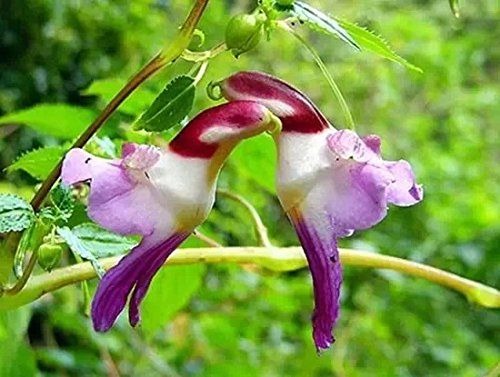
बालसैम परिवार (Balsam Family) का यह फूल बेहद खूबसूरत होता है। इसे वैज्ञानिक भाषा में इमपेशियंस सिटैसिना (Impatiens Psittacina) कहते हैं। इस फूल का रंग पर्पल और कैरमाइन रेड होता है। एक तरफ से देखने पर यह फूल किसी तोते के जैसा दिखता है, इसलिए इसका नाम पैरट फ्लावर पड़ा है। ब्रिटिश बॉटैनिस्ट सर जोसेफ डॉल्टन हुकर ने इसे सबसे पहले 1901 में देखा था, उसके बाद इसका नाम फ्लाइंक कुकैटू (Flying Cockatoo) रखा था। यह दुर्लभ पौधा है. थाईलैंड, म्यांमार और भारत के कुछ इलाकों में मिलता है। 

पैरट फ्लावर (Parrot Flower)

यह पौधा सीधा होता है और इसकी शाखाएँ बहुतायत से होती हैं तथा यह लगभग आधे मीटर की ऊँचाई तक सघन रूप से बढ़ता है। अन्य इम्पैटिएन्स प्रजातियों की तरह इसके तने मोटे होते हैं, पत्तियों के किनारे दाँतेदार होते हैं।  पार्श्व बाह्यदल गोलाकार और हल्के हरे रंग के होते हैं। निचला बाह्यदल बल्बनुमा होता है और कारमाइन में नोकदार एक हुकनुमा स्पर में संकरा हो जाता है। पृष्ठीय पंखुड़ी गोलाकार और हुड वाली होती है जबकि पार्श्व संयुक्त पंखुड़ियाँ लंबी होती हैं। 

पैरट फ्लावर (Parrot Flower)

तोते के फूलों को आम फूलों से अलग करने वाली बात है उनका असाधारण आकार। ये फूल खास परागणकों, जैसे कि हमिंगबर्ड और सन बर्ड को आकर्षित करने के लिए विकसित हुए हैं। जीवंत ब्रैक्ट्स, जो संशोधित पत्ते हैं, इन पक्षियों के लिए एक बसेरा बनाते हैं। असली फूल इन ब्रैक्ट्स के भीतर छिपे होते हैं, उनका अमृत पक्षियों को आकर्षित करता है। जब पक्षी अमृत पीते हैं, तो वे अनजाने में पराग को एक फूल से दूसरे फूल में स्थानांतरित कर देते हैं, जिससे परागण में सहायता मिलती है।

पैरट फ्लावर (Parrot Flower)

English Translate

Parrot Flower

Common Name: Parrot Flower
Scientific Name: Impatiens Psittacina

This flower of the Balsam Family is very beautiful. It is called Impatiens Psittacina in scientific language. The color of this flower is purple and carmine red. When seen from one side, this flower looks like a parrot, hence its name is Parrot Flower. British botanist Sir Joseph Dalton Hooker first saw it in 1901, after which it was named Flying Cockatoo. This is a rare plant. It is found in Thailand, Myanmar and some areas of India.

पैरट फ्लावर (Parrot Flower)

This plant is erect and has many branches and it grows densely to a height of about half a meter. Like other Impatiens species, its stems are thick, the edges of the leaves are serrated. The lateral sepals are rounded and pale green. The lower sepal is bulbous and narrows into a hook-like spur tipped in carmine. The dorsal petal is rounded and hooded while the lateral united petals are long.

पैरट फ्लावर (Parrot Flower)

What sets parrot flowers apart from common flowers is their extraordinary shape. These flowers have evolved to attract special pollinators, such as hummingbirds and sunbirds. The vibrant bracts, which are modified leaves, form a perch for these birds. The true flowers are hidden within these bracts, their nectar attracting the birds. When birds drink the nectar, they inadvertently transfer pollen from one flower to another, aiding in pollination.

पैरट फ्लावर (Parrot Flower)

बंदर चेहरा आर्किड || Monkey Face Orchid

बंदर चेहरा आर्किड

बंदर के चेहरे वाले ऑर्किड काफी लोकप्रिय हैं, लेकिन बहुत दुर्लभ ऑर्किड प्रकार हैं। यह प्यारा और डरावना दोनों है। यह दुर्लभ फूल दक्षिण अमेरिकी आर्किड बंदर जैसा दिखता है। इसकी गंध पके संतरे की तरह होती है और यह इक्वाडोर और पेरू के वर्षा वन में पाया जा सकता है। इसे देखने के लिए हाइकिंग बूट पहनने होंगे, क्योंकि यह 2000 मीटर की ऊँचाई पर पहाड़ों के किनारे उगता है।

बंदर चेहरा आर्किड || Monkey Face Orchid

बंदर चेहरा आर्किड, जिसे ड्रैकुला सिमिया या बंदर जैसा ड्रैकुला भी कहा जाता है। क्यूंकि इसके फूल की बनावट बंदर के चेहरे जैसी होती है। ड्रैकुला ऑर्किड परिवार की 120 प्रजातियों में से है। आर्किड की कई प्रजातियाँ मौसमी नहीं होतीं और पूरे साल में कभी भी खिल सकती हैं। हालांकि सबसे लोकप्रिय में से एक ड्रैकुला सिमिया (Monkey Face Orchid) है।

मंकी ऑर्किड से निकलने वाली खुशबू उसके नाम या रूप से ज़्यादा आकर्षक हो सकती है। ऑर्किड की यह खास प्रजाति खिलते समय पके संतरे की खुशबू छोड़ती है। सबसे अच्छी बात क्या है? साल के किसी भी समय, किसी भी मौसम में, वे खिल सकते हैं।

बंदर चेहरा आर्किड || Monkey Face Orchid

ये मनमोहक फूल ठंडे तापमान और आंशिक छाया वाले स्थानों पर सबसे अच्छे लगते हैं। वे एक प्रकार की प्रजाति हैं जिन्हें लंबे समय तक अपने खुश बंदर-चेहरे को जीवित रखने के लिए बहुत देखभाल और प्यार की आवश्यकता होती है। 

यह किसी भी मौसम में खिलता है और इसके पुष्पक्रम पर कई फूल एक के बाद एक खिलते हैं। यह आर्किड आवास विनाश और ज़्यादा संग्रह की वजह से विलुप्त होने के खतरे में है। इसके फूलों के रंग, पैटर्न, और आकार अलग-अलग हो सकते हैं। इसके फूलों की चमक और रंग स्थानीय जलवायु परिस्थितियों और पोषण पर निर्भर करते हैं। 

बंदर चेहरा आर्किड || Monkey Face Orchid

English Translate

Monkey Face Orchid

Monkey face orchids are a very popular but very rare orchid type. It is both cute and scary. This rare flowering South American orchid resembles a monkey. It smells like ripe oranges and can be found in the rainforests of Ecuador and Peru. You will need to wear hiking boots to see it, as it grows on the side of mountains at an altitude of 2000 meters.

बंदर चेहरा आर्किड || Monkey Face Orchid

The Monkey Face Orchid, also known as Dracula simia or Monkey Dracula, is one of the 120 species of the Dracula orchid family. Many species of orchids are not seasonal and can bloom at any time throughout the year. However, one of the most popular is the Dracula simia (Monkey Face Orchid).

The fragrance that the monkey orchid gives off may be more attractive than its name or appearance. This special species of orchid gives off the scent of ripe oranges when it blooms. What's the best part? They can bloom any time of the year, in any season.

These adorable flowers look best in places with cool temperatures and partial shade. They are a species that needs a lot of care and love to keep their happy monkey-faces alive for a long time.

बंदर चेहरा आर्किड || Monkey Face Orchid

It blooms in any season and has many flowers on its inflorescence, one after the other. This orchid is in danger of extinction due to habitat destruction and overcollection. Its flowers can vary in color, pattern, and size. The brightness and color of its flowers depend on local climatic conditions and nutrition.

जेड बेल, एमराल्ड बेल या फ़िरोज़ा जेड बेल || Jade Vine

जेड बेल

सामान्य नाम: जेड बेल
वैज्ञानिक नाम: स्ट्रॉन्गिलोडोन मैक्रोबोट्रिस

जेड बेल को एमराल्ड क्रीपर के नाम से भी जाना जाता है। स्ट्रॉन्गिलोडोन मैक्रोबोट्रिस , जिसे आमतौर पर जेड बेल, एमराल्ड बेल या फ़िरोज़ा जेड बेल, के नाम से जाना जाता है, फिलीपींस में पाई जाने वाली एक फलीदार बेल है। यह एक खूबसूरत उष्णकटिबंधीय बेल है। जेड बेल के पौधों को नम, समृद्ध, अच्छी जल निकासी वाली मिट्टी की आवश्यकता होती है। हालाँकि आंशिक छाया को प्राथमिकता दी जाती है, लेकिन लाल जेड बेल के पौधे तब सबसे ज़्यादा अच्छे उगते हैं जब उनकी जड़ें पूरी छाया में होती हैं। पौधे के आधार के चारों ओर गीली घास की एक परत बिछाकर इसे आसानी से पूरा किया जा सकता है।

जेड बेल, एमराल्ड बेल या फ़िरोज़ा जेड बेल || Jade Vine

यह एक लोकप्रिय सजावटी पौधा है, जो जीवंत फ़िरोज़ा या हरे-नीले पंजे के आकार के फूलों के झरते गुच्छों के लिए जाना जाता है। जेड बेल, जिसे वैज्ञानिक रूप से स्ट्रॉन्गिलोडोन मैक्रोबोट्रिस के नाम से जाना जाता है, फिलीपींस की एक दुर्लभ और आकर्षक फूल वाली बेल है। जबकि यह पौधा आम तौर पर चमकीले नीले-हरे फूल पैदा करता है, लाल फूलों वाली जेड बेल की कोई प्राकृतिक किस्म नहीं है। जेड बेल का सबसे आम रंग रूप नीला है, हालाँकि कुछ खेती की जाने वाली किस्में हैं, जो नीले रंग के हल्के या गहरे रंग प्रदर्शित कर सकती हैं।

जेड बेल, एमराल्ड बेल या फ़िरोज़ा जेड बेल || Jade Vine

प्राकृतिक दुनिया में, जेड वाइन अपने अनूठे और जीवंत नीले-हरे फूलों के लिए प्रसिद्ध है, जो लंबे, लटकते हुए गुच्छों में बढ़ते हैं। यह अपनी दुर्लभता और खतरे की स्थिति के कारण एक बेशकीमती और संरक्षित प्रजाति है।

जेड बेल की खेती के लिए उष्णकटिबंधीय वातावरण की आवश्यकता होती है। पौधे की आकर्षक उपस्थिति और सीमित वितरण दुनिया भर में पौधे के प्रति उत्साही लोगों के बीच इसके आकर्षण में योगदान देता है।  

स्ट्रॉन्गिलोडोन मैक्रोबोट्रिस का वर्णन सबसे पहले 1841 में पश्चिमी खोजकर्ताओं द्वारा किया गया था। यह पौधा फिलीपींस के लुज़ोन द्वीप पर माउंट माकिलिंग की जंगली ढलानों पर संयुक्त राज्य अमेरिका के अन्वेषण अभियान के सदस्यों द्वारा देखा गया था। इस पौधे को इसका पश्चिमी नाम मिला और इसका वर्णन सबसे पहले पश्चिमी साहित्य में हार्वर्ड स्थित वनस्पतिशास्त्री आसा ग्रे द्वारा किया गया था। उन्होंने संयुक्त राज्य अमेरिका के बहु-जहाज अभियान द्वारा एकत्र किए गए हजारों पौधों का वर्णन किया। 

जेड बेल, एमराल्ड बेल या फ़िरोज़ा जेड बेल || Jade Vine

इसकी प्रजाति उपनाम मैक्रोबोट्रिस का अर्थ है “लंबा अंगूर क्लस्टर”, ग्रीक मैक्रोज़ "लंबा" और बोट्रीस "अंगूर का गुच्छा",फल का जिक्र करते हुए; जीनस का नाम स्ट्रॉन्गिलोस "गोल", और ओडस "दांत" से निकला है। कैलिक्स के गोल दांतों का जिक्र करते हुए। 

इसमें 2 सेमी व्यास तक के मोटे तने होते हैं, जिसका उपयोग यह सूरज की रोशनी तक पहुँचने के लिए ऊँचे पेड़ों पर चढ़ने के लिए करता है। इसके तने की लंबाई 18 मीटर तक पहुँच सकती है। बेल अपने मेजबान के तने और शाखाओं के माध्यम से खुद को उलझा लेती है।

जेड बेल, एमराल्ड बेल या फ़िरोज़ा जेड बेल || Jade Vine

इसकी हल्की हरी पत्तियां छतरी पर फैली हुई हैं और एकांतर रूप से व्यवस्थित हैं। प्रत्येक पत्ती में म्यूक्रोनेट युक्तियों के साथ तीन आयताकार पत्रक होते हैं, बीच का पत्रक सबसे बड़ा होता है।

पंजे के आकार या चोंच के आकार के फूल 75 या अधिक फूलों के लटकते ट्रस या स्यूडोरेसेम में होते हैं और 3 मीटर तक लंबे हो सकते हैं। फ़िरोज़ा फूल का रंग फ़िरोज़ा और जेड खनिजों के कुछ रूपों के समान होता है , जो नीले-हरे से लेकर पुदीने के हरे रंग तक भिन्न होता है। फूल परिपक्व लताओं द्वारा उत्पादित पुष्पक्रमों से अंगूर के गुच्छों की तरह लटकते हैं । प्रत्येक फूल मुड़े हुए पंखों वाली एक मोटी-तगड़ी तितली जैसा दिखता है; उन्होंने कुछ ऐसे संशोधन विकसित किए हैं, जिससे उन्हें चमगादड़ की एक प्रजाति द्वारा परागण करने की अनुमति मिलती है जो पुष्पक्रम पर उल्टा लटककर उसका रस पीता है ।

जेड बेल, एमराल्ड बेल या फ़िरोज़ा जेड बेल || Jade Vine

जेड बेल फल छोटे, आयताकार, मांसल बीजपोड 15 सेमी तक लंबे होते हैं और इनमें 12 बीज तक होते हैं। जेड बेल जंगली में चमगादड़ द्वारा परागित होती है, इसलिए इसके फल को फलने के लिए ग्रीनहाउस में हाथ से परागित किया जाना चाहिए, जो तरबूज के आकार का हो सकता है। यह इंग्लैंड के केव गार्डन में रॉयल बोटेनिक गार्डन में वर्षों से किया जा रहा है, जहाँ बीज संरक्षण एक सतत फोकस है, विशेष रूप से वर्षावन आवास के नुकसान के मद्देनजर। 

English Translate

Jade Vine


Common Name: Jade Vine
Scientific Name: Strongylodon macrobotrys

Jade vine is also known as emerald creeper. Strongylodon macrobotrys, commonly known as jade vine, emerald vine or turquoise jade vine, is a leguminous vine native to the Philippines. It is a beautiful tropical vine. Jade vine plants require moist, rich, well-drained soil. Although partial shade is preferred, red jade vine plants grow best when their roots are in full shade. This can be easily accomplished by spreading a layer of mulch around the base of the plant.

जेड बेल, एमराल्ड बेल या फ़िरोज़ा जेड बेल || Jade Vine

It is a popular ornamental plant, known for its cascading clusters of vibrant turquoise or greenish-blue claw-shaped flowers. Jade vine, scientifically known as Strongylodon macrobotrys, is a rare and attractive flowering vine native to the Philippines. While this plant typically produces bright blue-green flowers, there are no natural varieties of jade vine with red flowers. The most common color form of jade vine is blue, although there are some cultivated varieties that may display lighter or darker shades of blue.

In the natural world, jade vine is famous for its unique and vibrant blue-green flowers that grow in long, hanging clusters. It is a prized and protected species due to its rarity and threatened status.

Cultivation of jade vine requires a tropical environment. The plant's attractive appearance and limited distribution contribute to its fascination among plant enthusiasts worldwide.

जेड बेल, एमराल्ड बेल या फ़िरोज़ा जेड बेल || Jade Vine

Strongylodon macrobotrys was first described by Western explorers in 1841. The plant was observed by members of the United States Exploring Expedition on the forested slopes of Mount Makiling on the island of Luzon in the Philippines. The plant received its western name and was first described in Western literature by Harvard-based botanist Asa Gray. He described thousands of plants collected by a United States multi-ship expedition.

Its species epithet Macrobotrys means “tall grape cluster”, from the Greek macros “tall” and botrys “bunch of grapes”, referring to the fruit; the genus name derives from strongylos “round”, and odus “tooth”, referring to the rounded teeth of the calyx.

It has thick stems up to 2 cm in diameter, which it uses to climb tall trees to reach sunlight. Its stem length can reach 18 m. The vine entangles itself through the stems and branches of its host.

Its light green leaves spread over the canopy and are arranged alternately. Each leaf has three oblong leaflets with mucronate tips, the middle leaflet being the largest.

जेड बेल, एमराल्ड बेल या फ़िरोज़ा जेड बेल || Jade Vine

The claw-shaped or beak-shaped flowers are borne in pendent trusses or pseudoracemes of 75 or more flowers and can be up to 3 m long. The turquoise flower color is similar to some forms of the minerals turquoise and jade, varying from blue-green to mint green. The flowers hang like bunches of grapes from inflorescences produced by mature vines. Each flower resembles a stout-bodied butterfly with folded wings; they have evolved certain modifications that allow them to be pollinated by a species of bat that hangs upside down on the inflorescence to drink its nectar.

जेड बेल, एमराल्ड बेल या फ़िरोज़ा जेड बेल || Jade Vine

Jade vine fruits are small, oblong, fleshy seedpods up to 15 cm long and contain up to 12 seeds. Jade vine is pollinated by bats in the wild, so it must be hand-pollinated in greenhouses to produce its fruit, which can be the size of a watermelon. This has been done for years at the Royal Botanic Gardens at Kew Gardens in England, where seed conservation is an ongoing focus, especially in the wake of the loss of rainforest habitat.

पिचर प्लांट || Pitcher Plants || Most Amazing and Weird Flower

पिचर प्लांट

"पिचर प्लांट" मांसाहारी पौधे हैं, जिनके पत्तों के रूपांतरित रूप ट्यूबलर आकार में जुड़ जाते हैं जिन्हें पिचर के रूप में जाना जाता है। पिचर कीटों को आकर्षित करते हैं और उन्हें फँसाते हैं, जो फिर पिचर के तल पर पाचन रस में विघटित हो जाते हैं। विभिन्न प्रकार के पिचर प्लांट में कीटों को पकड़ने के लिए विभिन्न तंत्र प्रस्तावित किए गए हैं, लेकिन पिचर के अंदर एक फिसलन वाली तरल परत का निर्माण सबसे महत्वपूर्ण है।

पिचर प्लांट || Pitcher Plants || Most Amazing and Weird Flower

नेपेन्थेस पिचर प्लांट के रिम्स की विशेषता रेडियल लकीरों के साथ नियमित सूक्ष्म संरचनाओं से होती है। अमृत के जुड़ने से पानी, बनावट में रिक्त स्थान को भर देगा और एक निरंतर अत्यधिक गीला करने योग्य (सुपरहाइड्रोफिलिक) फिल्म बनाएगा। चींटियों जैसे कीट जिनके पैरों पर नरम चिपकने वाले पैड होते हैं, वे तरल परत से चिपक नहीं सकते हैं, जिसका अर्थ है कि वे बच नहीं सकते हैं। कीटों के पैरों पर तेल जो आमतौर पर चिपकने में मदद करते हैं, इन पिचर प्लांट्स में स्थिति को और खराब कर देते हैं, जिससे पिचर में प्रवेश करने वाली अधिकांश चींटियाँ नम मौसम में फंस जाती हैं।

पिचर प्लांट दिखने में साधारण लेकिन बहुत ही शानदार होते हैं। पिचर प्लांट मांसाहारी होते हैं, जिनकी पत्तियां घड़े के आकार की होती हैं, जो पौधे की पत्तियों से एक जाल बनाती हैं। पिचर प्लांट को ट्रॉपिकल पिचर प्लांट के नाम से भी जाना जाता है और इसका वैज्ञानिक नाम नेपेंथेस है। 

पिचर प्लांट || Pitcher Plants || Most Amazing and Weird Flower

अन्य मांसाहारी पौधों की तरह पिचर प्लांट भी कम पोषक तत्व वाली मिट्टी वाले प्राकृतिक वातावरण में उगते हैं। आम तौर पर ऑस्ट्रेलिया और दक्षिण पूर्व एशिया के दलदलों या मेडागास्कर के नम जंगलों में पाए जाते हैं। 

पिचर प्लांट कई प्रकार के होते हैं -

उष्णकटिबंधीय घटपर्णी पौधों की 100 से अधिक प्रजातियां पाई जाती हैं, जो मुख्यतः दक्षिण पूर्व एशिया (मलेशिया, इंडोनेशिया और फिलिपींस) तथा उत्तरी ऑस्ट्रेलिया और भारत में पाई जाती हैं।


नेपेंथेस अलाटा 

दक्षिण पूर्व एशिया, मुख्य रूप से फिलिपींस में इन पिचर पौधों का घर है। इनके 8 इंच लंबे हरे लटकते हुए पिचर होते हैं, जिन पर लाल रंग के धब्बे होते हैं।

पिचर प्लांट || Pitcher Plants || Most Amazing and Weird Flower

पीला पिक्चर प्लांट या एस. फ्लेवा 

फ्लोरिडा और टेक्सास का मूल निवासी यह पिचर प्लांट प्रत्यक्ष सूर्य के प्रकाश में चमकीला पीला हो जाता है।

पिचर प्लांट || Pitcher Plants || Most Amazing and Weird Flower

बेगानी पिचर प्लांट या सर्रेसेनिया पपुर्रिया

 यह घड़ा पौधा जिसे उत्तरी घड़ा पौधा भी कहा जाता है, कई क्षेत्रों में उगता है। यह कनाडा और उत्तरी अमेरिका में जंगली रूप में पनपता है। इसके घड़े गहरे लाल और बैंगनी रंग के होते हैं।

पिचर प्लांट || Pitcher Plants || Most Amazing and Weird Flower

पैरट पिचर प्लांट या सितासिना 

यह पौधा पक्षी की चोंच जैसा दिखता है और मिसिसिपी से जॉर्जिया तक गोल्फ तट के गीले क्षेत्र में उगता है।

पिचर प्लांट || Pitcher Plants || Most Amazing and Weird Flower

कोबरा लिली या डार्लिंगटोनिया कैलिफ़ोर्निका

 कैलिफोर्निया पिचर प्लांट के नाम से भी जाना जाने वाला कोबरा लिली डार्लिंगटोनिया जीनस की एकमात्र प्रजाति है। यह कैलिफोर्निया और ओरेगॉन के तटो पर पाया जाता है। यह घुमावदार पौधा कोबरा के सर जैसा दिखता है, जिसके पेरिस्टम के अंत में कांटेदार जीभ जैसी एक उपांग होती है। कोबरा लिली अपने अनोखे कोबरा सिर जैसी आकृति के कारण ध्यान आकर्षित करती है।

पिचर प्लांट || Pitcher Plants || Most Amazing and Weird Flower

English Translate

Pitcher Plants

Pitcher plants are carnivorous plants with modified forms of leaves fused into tubular shapes known as pitchers. Pitchers attract and trap insects, which then disintegrate into digestive juices at the bottom of the pitcher. Various mechanisms have been proposed for the capture of insects in different types of pitcher plant, but the formation of a slippery liquid layer inside the pitcher is the most important.

The rims of Nepenthes pitcher plants are characterised by regular microscopic structures with radial ridges. Water, from the addition of nectar, will fill the spaces in the texture and form a continuous highly wettable (superhydrophilic) film. Insects such as ants which have soft adhesive pads on their feet cannot stick to the liquid layer, meaning they cannot escape. The oils on the insect's feet that normally aid adhesion make the situation worse in these pitcher plants, so that most ants that enter the pitcher become trapped in damp weather.

पिचर प्लांट || Pitcher Plants || Most Amazing and Weird Flower

Pitcher plants are simple in appearance but very spectacular. Pitcher plants are carnivorous plants with pitcher-shaped leaves that form a web with the leaves of the plant. Pitcher plants are also known as tropical pitcher plants and their scientific name is Nepenthes.

Like other carnivorous plants, pitcher plants also grow in natural environments with low nutrient soil. They are usually found in swamps in Australia and Southeast Asia or moist forests in Madagascar.

There are many types of pitcher plants -

There are more than 100 species of tropical pitcher plants, found mainly in Southeast Asia (Malaysia, Indonesia and the Philippines) and northern Australia and India.

Nepenthes alata

Southeast Asia, mainly the Philippines, is home to these pitcher plants. They have 8-inch-long green hanging pitchers with red spots on them.

Yellow Picture Plant or S. flava

Native to Florida and Texas, this pitcher plant turns bright yellow in direct sunlight.

Begone Pitcher Plant or Sarracenia pappurrea

This pitcher plant, also known as the northern pitcher plant, grows in many regions. It grows wild in Canada and North America. Its pitchers are deep red and purple in color.

Parrot Pitcher Plant or Psittacina

This plant resembles a bird's beak and grows in the wet areas of the Gulf Coast from Mississippi to Georgia.

Cobra Lily or Darlingtonia californica

Also known as the California Pitcher Plant, the cobra lily is the only species of the Darlingtonia genus. It is found on the coasts of California and Oregon. This curved plant resembles a cobra's head, with a forked tongue-like appendage at the end of the peristome. The cobra lily attracts attention due to its unique cobra head-like shape.

मधुमक्खी आर्किड || Bee Orchid (Laughing Bumble Bee Orchid)

मधुमक्खी आर्किड

सामान्य नाम: मधुमक्खी आर्किड
वैज्ञानिक नाम: ओफ्रीज़ एपिफेरा 

मधुमक्खी आर्किड, जिसको लाफिंग बम्बलबीज़ ऑर्किड को देखकर आपके चेहरे पर भी मुस्कुराहट आ जाएगी क्योंकि यह फूल खुद ‘मुस्कुराता’ है। वास्तव में इस फूल का आकार ही ऐसा है, जिससे लगता है कि फूल मुस्कुरा रहा है। इस फूल को ओफ्रीज़ एपिफेरा कहते हैं। इस फूल के पौधे यूरोप और अफ्रीका में पाई जाते हैं। इसे आमतौर पर ‘मधुमक्खी ऑर्किड’ के रूप में जाना जाता है, क्योंकि यह फूल मधुमक्खी के आकार का लगता है। अपने इस अनोखे रूप के साथ यह फूल सोशल मीडिया पर भी छाया रहता है।

मधुमक्खी आर्किड || Bee Orchid

ओफ्रीज़ एपिफेरा 15-50 सेंटीमीटर (6-20 इंच) की ऊंचाई तक बढ़ता है। यह कठोर आर्किड शरद ऋतु में पत्तियों के छोटे-छोटे रोसेट विकसित करता है, जो सर्दियों के दौरान धीरे-धीरे बढ़ते रहते हैं। आधार पत्तियां अंडाकार या आयताकार-लांसोलेट होती हैं और ऊपरी पत्तियां और सहपत्र अंडाकार-लांसोलेट और आवरणदार होते हैं। पत्तियां समानांतर शिराविन्यास प्रदर्शित करती हैं। 

मधुमक्खी आर्किड || Bee Orchid

इस पौधे का यूरोपीय मूल है, जिस स्थान पर यह प्रजाति पहली बार देखी गई थी वह अभी तक ज्ञात नहीं है, लेकिन जो ज्ञात है वह फ्रांस, इटली, स्पेन और अन्य देशों में देखा गया है। विशेष रूप से स्पेन में कई प्रांत हैं जहां इस प्रजाति का विकास आसानी से होता है। 

मधुमक्खी आर्किड || Bee Orchid

यह पौधा महाद्वीपीय यूरोप में मध्य अप्रैल से खिलता है, लेकिन यूनाइटेड किंगडम में यह जून से जुलाई तक फूल देता है। एक पुष्प स्पाइक का उत्पादन होता है, जिसमें एक से बारह फूल होते हैं। तीन बड़े, बैंगनी बाह्यदल फूल के आधार को घेरे होते हैं, जिन्हें आसानी से पंखुड़ियों के लिए गलत समझा जा सकता है। असली पंखुड़ियां बाह्यदल के ठीक ऊपर दो छोटी, रोमिल हरी संरचनाओं के रूप में एक केंद्रीय स्तंभ से पार्श्व में निकली हुई होती हैं लेबेलम त्रिपालित होता है, जिसके बालों वाले पार्श्व लोब पर दो स्पष्ट कूबड़ होते हैं और एक बालों वाला मध्य लोब होता है जिसका पैटर्न मधुमक्खी के पेट की नकल करता है। लेबेलम रंग का पैटर्न काफी परिवर्तनशील होता है।

English Translate

Bee Orchid

Common name: Bee Orchid
Scientific name: Ophrys apifera

मधुमक्खी आर्किड || Bee Orchid

The bee orchid, also known as the Laughing Bumblebees Orchid, will bring a smile on your face because this flower itself 'smiles'. In fact, the shape of this flower is such that it seems that the flower is smiling. This flower is called Ophrys apifera. Plants of this flower are found in Europe and Africa. It is commonly known as 'bee orchid' because this flower looks like a bee. With this unique form, this flower is also popular on social media.

मधुमक्खी आर्किड || Bee Orchid

Ophrys apifera grows to a height of 15-50 cm (6-20 inches). This hardy orchid develops small rosettes of leaves in autumn, which continue to grow slowly during winter. The base leaves are oval or oblong-lanceolate and the upper leaves and bracts are oval-lanceolate and sheathed. The leaves exhibit parallel venation.

This plant has a European origin, the place where this species was first observed is not yet known, but what is known is that it has been observed in France, Italy, Spain and other countries. There are several provinces in Spain in particular where this species grows readily.

मधुमक्खी आर्किड || Bee Orchid

This plant blooms from mid-April in continental Europe, but in the United Kingdom it flowers from June to July. A floral spike is produced, bearing one to twelve flowers. Three large, purple sepals surround the base of the flower, which can easily be mistaken for petals. The true petals appear just above the sepals as two small, hairy green structures extending laterally from a central column The labellum is triploid, with two pronounced humps on the hairy lateral lobes and a hairy central lobe whose pattern mimics the abdomen of a bee. The labellum colour pattern is quite variable.

सफेद इग्रेट आर्किड || White Egret Orchid

सफेद इग्रेट आर्किड

सामान्य नाम: सफेद इग्रेट आर्किड
वैज्ञानिक नाम: हैबनेरिया रेडिएटा

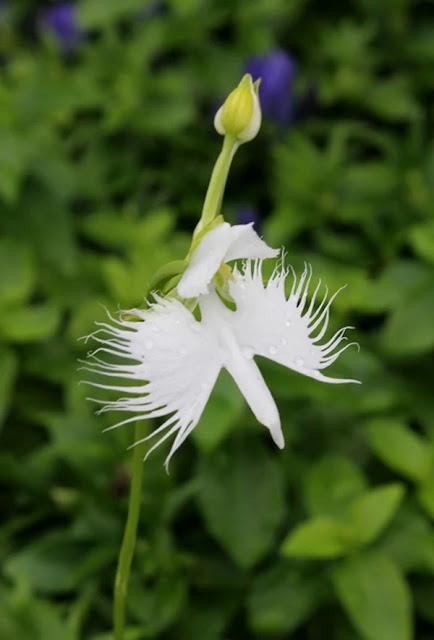
सफेद इग्रेट आर्किड को सफ़ेद एग्रेट फूल, क्रेन ऑर्किड या फ्रिंज्ड ऑर्किड के नाम से भी जाना जाता है। एग्रेट फूल ( हैबनेरिया रेडिएटा ) में स्ट्रैपी, गहरे हरे रंग की पत्तियां और खूबसूरत फूल होते हैं, जो उड़ते हुए शुद्ध सफ़ेद पक्षियों की तरह दिखते हैं। सफेद इग्रेट आर्किड एशिया का मूल निवासी। इग्रेट फूल एक प्रकार का स्थलीय आर्किड है जो मांसल, मटर के आकार के कंदों से उगता है। यह मुख्य रूप से घास वाले आर्द्रभूमि, छायादार ग्लेड्स या दलदलों में उगता है।

सफेद इग्रेट आर्किड || White Egret Orchid

इसका फूल इतना सफ़ेद और इतना सुंदर होता है कि यह इग्रेट नामक सफ़ेद पक्षी की याद दिलाता है। देखने में यह एक बगुला की तरह है, जिसके पंख सफ़ेद होते हैं। यह ऑर्किड की एक जंगली किस्म है और भले ही यह एशिया में पाया जाता है, लेकिन इसे संयुक्त राज्य अमेरिका में भी उगाया जाता है। इसका फूल अपने अलग सफ़ेद पंख के साथ पूरी उड़ान में इग्रेट की तरह ही दिखता है। यह ऑर्किड की एक स्थलीय प्रजाति है जो पूर्ण और आंशिक सूर्य के प्रकाश में भी उग सकती है।

सफेद इग्रेट आर्किड || White Egret Orchid

 इग्रेट फूल अपने प्राकृतिक आवास में खतरे में है, संभवतः शहरीकरण, आवास विनाश और अत्यधिक संग्रह के कारण। इग्रेट फूल USDA प्लांट हार्डनेस ज़ोन 5 से 10 में उगाने के लिए उपयुक्त है, हालाँकि उचित देखभाल और पर्याप्त गीली घास के साथ, यह अधिक उत्तरी जलवायु को सहन कर सकता है, पर इग्रेट फूल को गमलों में उगा सकते हैं और शरद ऋतु में ठंढे तापमान आने पर इसे घर के अंदर रख सकते हैं। 

व्हाइट इग्रेट के पत्ते घास की तरह होते हैं, जिनमें से प्रत्येक 5-20 सेमी लंबा और 1 सेमी चौड़ा होता है। एक पौधे में 7 पत्ते तक होते हैं और वसंत के दौरान नए पत्ते बनते हैं। ये नई पत्तियाँ वसंत में पत्तेदार वृद्धि के रूप में शुरू होती हैं, लेकिन गर्मियों के मौसम तक पूर्ण आकार की पत्तियाँ बन जाती हैं। ये पत्तियाँ एक तने पर एक-एक करके व्यवस्थित होती हैं जो 50 सेमी तक बढ़ सकती हैं। पत्तियाँ जमीन के नीचे कंद से निकलती हैं और इसलिए वे जमीन के बहुत करीब रहती हैं।

सफेद इग्रेट आर्किड || White Egret Orchid

एक डंठल पर 1-8 फूल हो सकते हैं और प्रत्येक फूल 4 सेमी चौड़ा हो सकता है। बाह्यदल हरे और छोटे होते हैं लेकिन होंठ और पंखुड़ियाँ बर्फीले सफेद रंग की होती हैं। फूल का होंठ आकार और आकार में असाधारण होता है जिसमें तीन लोब होते हैं। बड़े लोब पार्श्व में फैले होते हैं और वे किनारे पर होते हैं जबकि तीसरा लोब छोटा होता है और नीचे की ओर इशारा करता है। वास्तव में यह बड़े लोबों की व्यवस्था है जो बगुले के शरीर की तरह दिखते हैं जबकि पंखुड़ियाँ पूरी उड़ान में बगुले के पंख बनाती हैं।

व्हाइट इग्रेट ऑर्किड एक कंद से उगता है जो केवल कुछ सेंटीमीटर लंबा होता है। इस कंद में जड़ों का एक नेटवर्क होता है और यह पौधे के विकास के शुरुआती चरण में ऊर्जा के स्रोत के रूप में कार्य करता है। बाद में, मांसल जड़ों के इस नेटवर्क से नए बल्ब बनते हैं जबकि पहला कंद धीरे-धीरे मर जाता है। लंबे समय तक व्हाइट इग्रेट की देखभाल करने के लिए 3 बल्ब तक हो सकते हैं। दिलचस्प बात यह है कि जड़ें भी कुछ समय बाद मर जाती हैं और बल्ब खुद ही नए पौधों को उगने देते हैं।

सफेद इग्रेट आर्किड || White Egret Orchid

English Translate

White Egret Orchid

The white egret orchid is also known as the white egret flower, crane orchid or fringed orchid. The egret flower (Habenaria radiata) has strappy, dark green leaves and beautiful flowers that look like pure white birds in flight. White Egret Orchid Native to Asia. The egret flower is a type of terrestrial orchid that grows from fleshy, pea-sized tubers. It grows mainly in grassy wetlands, shady glades or swamps.

सफेद इग्रेट आर्किड || White Egret Orchid

The flower is so white and so beautiful that it reminds one of the white bird called the egret. It looks like a heron with white wings. It is a wild variety of orchid and even though it is found in Asia, it is also grown in the United States. The flower looks just like an egret in full flight with its distinctive white wings. It is a terrestrial species of orchid that can grow in full and partial sunlight.

The Egret flower is endangered in its natural habitat, possibly due to urbanization, habitat destruction, and excessive collection. The Egret flower is suitable for growing in USDA plant hardiness zones 5 to 10, although with proper care and adequate mulch, it can tolerate more northern climates, but you can grow the Egret flower in pots and bring it indoors when frosty temperatures arrive in autumn.

The leaves of the White Egret are grass-like, each of which is 5-20 cm long and 1 cm wide. A plant has up to 7 leaves and new leaves form during the spring. These new leaves start out as leafy growth in the spring but become full-sized leaves by the summer season. These leaves are arranged one by one on a stem that can grow up to 50 cm long. The leaves grow from the tuber below ground and so they stay very close to the ground.

सफेद इग्रेट आर्किड || White Egret Orchid

There can be 1-8 flowers on a stalk and each flower can be up to 4 cm wide. The sepals are green and small but the lip and petals are snowy white in colour. The lip of the flower is extraordinary in size and shape with three lobes. The larger lobes are spread laterally and they are on the edge while the third lobe is smaller and points downwards. In fact it is the arrangement of the large lobes that look like the body of a heron while the petals form the wings of the heron in full flight.

The White Egret Orchid grows from a tuber that is only a few centimetres long. This tuber has a network of roots and it serves as a source of energy in the early stage of the plant's growth. Later, new bulbs are formed from this network of fleshy roots while the first tuber slowly dies. There can be up to 3 bulbs to care for the White Egret in the long term. Interestingly, the roots also die after some time and the bulbs themselves allow new plants to grow.